
Dr. Paul Borosky, DBA, MBA
Business Consultant · Sales Glossary
How Do You Say No to a Customer Politely?
Dr. Paul Borosky, DBA, MBA, turns down work that does not fit, and as a consultant he helps clients learn to do the same. Not every job is a good job. Some cost more than they pay. This business consultant guide explains when to say no, how to word it politely, and how a referral turns a refusal into goodwill.
Questions? Call or text (321) 948-9588. Dr. Paul answers personally.
Last Updated: 11/07/2026 · Written by Dr. Paul Borosky, DBA, MBA
The Short Answer
What Does It Mean to Decline a Customer?
How to do it: check whether you can do the job well, have the time, make a profit, and serve this kind of customer. If any answer is no, say so briefly, give a short reason, and offer an alternative: a different date, a smaller scope, a price for the extra, or a referral you trust.
Saying Yes to Jobs You Should Turn Down?
In Plain English
Turning Down the Wrong Work Kindly
Saying no well means turning down the wrong work kindly, and pointing the customer to someone who can help.
Saying no can cost less than saying yes. The wrong job eats time, margin, and the patience of everyone involved.
A Real-World Example
The Accounting Firm That Sent a Client Away
A small accounting firm in Richmond, Virginia specializes in restaurants. A manufacturer with complex inventory asks for help, and the owner knows the firm would struggle.
She says no, explains why, and refers him to a firm that handles manufacturers. Months later, that firm sends her two restaurant clients.
From Dr. Paul’s Fabled Forest
Cal the Camel and the Sled in the Desert
Doctor Owl was at Cal’s Caravan Trading Post when a traveler asked Cal to special-order a sled. In the desert.
“Of course,” Cal said, as he always did. “If you need it, I’ve got it.”
After the traveler stepped outside, Doctor Owl asked, “How did your last special order go?”
Cal sighed. It had taken three moons and lost him coins.
Doctor Owl taught him one sentence: “That is not something I do well, but the trader at the north oasis does. Tell her I sent you.”
Cal practiced it twice, then said it to the traveler. The traveler thanked him and went north.
By the next season, the north oasis trader was sending Cal her desert customers.
From Book 5 of Dr. Paul’s Fabled Forest Business School Series, where every business lesson starts with a story.
Dr. Paul’s Insight
Dr. Paul refers out work that does not fit his practice and finds it often comes back as referrals.
Put It to Work
How to Say No Politely
Decision check. Any “no” means consider declining: Can we do this well? Do we have time? Will it be profitable? Does it fit who we serve?
Keep it short. A brief reason is enough. A referral is optional, and only when you trust the provider.
Watch Out
Pitfalls When Saying No
The conflict just shows up later, bigger.
Resentment shows in the work and in the relationship.
A long apology sounds like the door is still open.
A bad referral costs you trust with two people.
Why It Matters
Benefits of Saying No Well
- More time for good-fit work
- Fewer unhappy customers
- Clear scope and fewer free extras
- Referral partners who may send work back
In Your Business Plan
How Saying No to a Customer Shows Up in a Business Plan
Lenders like a business that chooses its work. A short qualification policy shows the owner protects margin and quality.
Sample plan excerpt: Sales Plan, Qualification
“Leads are screened against four criteria: capability, capacity, profitability, and fit with the target customer. Work outside these criteria is declined with a referral to a vetted partner firm.”
FAQ
Questions Owners Ask About Saying No
Is it ever okay to turn down a customer?
How do I say no to extra work without losing the client?
How do I handle a rush request I can’t meet?
More From the Series
Keep Building Your Business
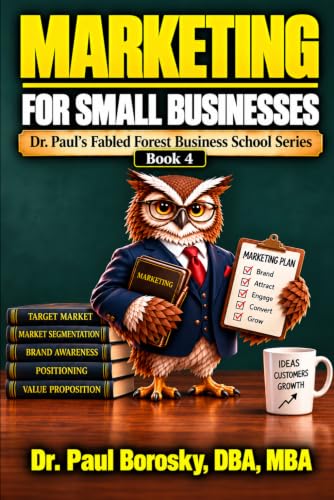
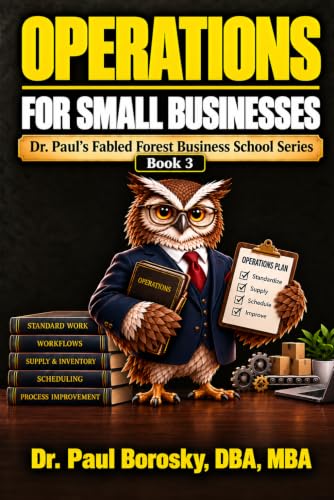
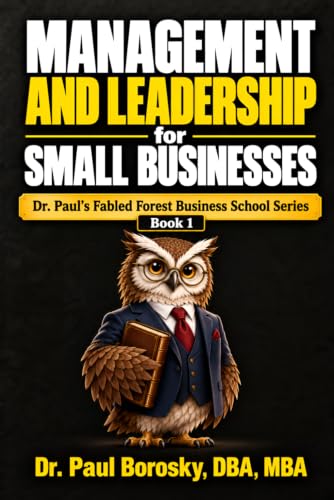
Every book in Dr. Paul’s Fabled Forest Business School Series teaches one subject through short stories, real terms, and one-page worksheets.
Dr. Paul Borosky, DBA, MBA
Dr. Paul is a business consultant and author with 14+ years of experience and 1,000+ written business plans. He works with owner-run small businesses on plans, financial projections, and the systems that let a business run without the owner doing everything. This page is part of the glossary for Sales for Small Businesses, Book 5 of Dr. Paul’s Fabled Forest Business School Series.
This page is for general educational purposes only. It is not legal or other professional advice. For decisions about your own business, consult a qualified professional.