
Dr. Paul Borosky, DBA, MBA
Business Plan Writer · Business Consultant
How Do You Get Funding to Open a Restaurant? Ask What Every Yes Will Cost
Most first-time owners only ask who will say yes. The better question is what each yes costs you, every month, for years.
Written by Dr. Paul Borosky, DBA, MBA
The Definition
What Is Restaurant Funding?
Restaurant funding is the capital used to open or expand a restaurant. It comes in two forms: debt, which is borrowed and repaid with interest while the owner keeps full ownership, and equity, which is exchanged for a share of ownership and future profits. Most independent restaurants combine owner savings with debt such as an SBA-guaranteed loan and equipment financing.
“A loan is money you rent. You pay it back with interest, but the restaurant stays yours. An investor is money that moves in with you. No payment, but they own part of every coin you make for as long as they stay.”
Need the answer fast? Read the gold Short Answer boxes and the numbered steps. Want the full picture? Follow Startup Steve the monkey from Dr. Paul’s Fabled Forest, as he walks into the First Bank of the Forest with a plan, a grin, and a card from the wrong lender. The story shows up in a few short gold notes along the way. The math sits in one section, clearly marked.
Get Your Restaurant Plan Written, or Build It Yourself
Lenders want covers, prime cost, and break even before they read the menu. Pick how you want to get there.
Business Consulting
Packed dining room and a thin bank balance? Dr. Paul helps restaurant owners sort out prime cost, cash, staffing, and menu pricing.
See consulting options →Business Plan Writing
FeaturedCovers by shift, prime cost, and break even, built into one plan your lender and landlord can follow. Dr. Paul writes it with you.
Start your plan →Restaurant Business Plan Template
A Word plan and an Excel model built around covers, check size, and food cost, with video tutorials for both.
See the template →Small Business Education
Free guides on funding, financial statements, and running the business, plus Dr. Paul’s plan-writing videos.
Start learning →From Dr. Paul’s Fabled Forest
Meet Steve: The Fastest Money in the Forest
Some lessons stick better as a story. Dr. Paul’s Fabled Forest is his business school told through a forest full of small business owners. Doctor Owl, a dry-witted consultant who lives in the Lone Oak, helps them fix the same problems real owners face. Today he meets Startup Steve the monkey in the lobby of the First Bank of the Forest, holding his noodle bar plan in one hand and a shiny business card in the other.
STEVE: (holding up the card) Good news. I might not even need the bank. A shark named Shannon says I can have the money today.
DOCTOR OWL: Today. And what does it cost?
STEVE: She said the terms are flexible.
DOCTOR OWL: Flexible terms tend to bend in one direction.
Isabelle the Iguana, the bank’s vice president, steps out of her office, her feathered hat brushing the doorframe.
ISABELLE: Steve. Before we talk about a loan, how much of your own money is going into this?
STEVE: (the grin fading) Mine? I was hoping to use everyone else’s.
ISABELLE: Then you understand why I am nervous.
DOCTOR OWL: Before you say yes to anyone, Steve, write down what every yes costs. Every month. For years.
An original Fabled Forest moment. Similar stories about Doctor Owl and the forest’s owners are in Accounting and Finance for Small Businesses, Book 2 of Dr. Paul’s Fabled Forest Business School.
Steve has a decision to make. Keep reading. You’ll see what he does, and why it works for your restaurant too.
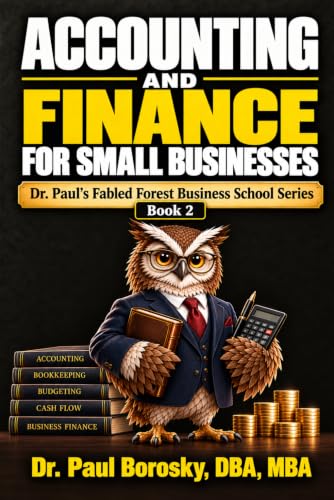 Similar stories in Accounting and Finance for Small Businesses
Dr. Paul’s Fabled Forest Business School, Book 2 See the Books →
Debt or Equity
What Are Your Restaurant Funding Options?
Every source of money falls into one of two groups. Know which one you are taking before you sign.
A bank loan, equipment financing, a credit card, a family loan. You pay interest. You keep all of the restaurant.
An investor gives you money for part of the restaurant. No payment, but they share every dollar of profit, often with a voice in how you run it.
Most independent restaurants are built mostly on debt, plus the owner’s own savings. Restaurant investors are rare, and the ones who say yes often want a big share, because they know the odds.
Steve walked in hoping to use everyone else’s money. That is the first thing Isabelle noticed.
The Sources
Where Does Restaurant Funding Come From?
- 1
Your own savings
The cheapest money there is, and the money every lender wants to see first. It proves you have real money at risk.
- 2
An SBA-guaranteed loan
The Small Business Administration does not lend the money. It guarantees part of a bank loan, which lets the bank say yes to a riskier business like a new restaurant.
- 3
Equipment financing
A loan secured by the equipment itself. If you stop paying, they take the equipment back.
- 4
Investors
No monthly payment, but a permanent share of the profit. Get the agreement in writing, with an attorney.
- 5
Family and friends
Fast and flexible. Also the money most likely to cost you something you cannot put a number on. Treat it exactly like a bank loan, in writing, with real interest.
- 6
Fast, easy lenders
Money that arrives in a day usually costs the most. Read every term before you sign, and compare the total cost, not the speed.
Steve’s FixShannon’s card went in the trash. Steve compared every offer by its total cost, not by how fast the money showed up.
Show the Math
What Does a Restaurant Loan Really Cost?
Every loan has three numbers: the amount, the rate, and the term. The real cost is everything you pay back above the amount you borrowed. Here is a sample, for illustration only.
| Loan | Amount | Rate and term | Monthly payment | Interest over the full term |
|---|---|---|---|---|
| SBA-guaranteed loan | $175,000 | About 10%, 10 years | About $2,313 | About $102,500 |
| Equipment financing | $35,000 | About 9%, 5 years | About $727 | About $8,600 |
| Total | $210,000 | About $3,040 | About $111,100 |
Lenders often look for 10% to 30% of the project to come from the owner. And remember the lease. Ten years at $9,000 a month, with rent rising 3% a year, is a promise to pay about $1.24 million. A lease is a loan with a different name.
The longer the term, the smaller the payment and the bigger the total cost. A salesperson will always show you the payment. Ask for the total.
The Lease Is a Loan
What Should You Check in a Restaurant Lease?
You cannot pay a lease off early. If the restaurant closes, you may still owe the rent. Give the lease the same attention as the loan, and an attorney’s eyes before you sign.
- 1
The personal guarantee
Most restaurant leases have one. Some landlords will limit it to a year or two of rent. Ask.
- 2
The rent increases
Fixed or tied to inflation? Write down the rent for every year of the lease.
- 3
Who pays for what
Property taxes, insurance, and common-area costs can add a lot on top of base rent.
- 4
The way out
Can you sell the restaurant and hand over the lease? What happens if you close?
From Dr. Paul’s Work as a Business Plan Writer
What a Business Plan Writer Sees in a Funding Request
A funding request is not a wish list. When Dr. Paul writes one, every dollar asked for ties to a line in the startup budget, and every payment ties to a month in the projections.
The requests that struggle usually skip the same step. They show what the owner wants to borrow. They never show that the restaurant can make the payment in a slow month.
A lender is not asking whether your restaurant can succeed. They are asking whether it can make the payment in February. Answer that question first.
From Dr. Paul’s Fabled Forest
What Steve Did Next
Two weeks later, Steve sat across from Isabelle again. This time he had one sheet of paper.
STEVE: My savings. The bank loan. The stove financing. And my cousin’s loan, in writing, with real interest.
ISABELLE: (studying the page) And the payments?
STEVE: Added up. Every month. Including the slow ones.
ISABELLE: And the shark?
STEVE: Looked fast. Cost the most.
Isabelle picked up her pen.
The lesson for your restaurant: Compare money by what it costs every month for years, not by how fast it arrives. Then prove the restaurant can make the payment in its slowest month.
In Your Business Plan
How Do You Write a Restaurant Funding Request?
The funding request is where your startup budget and your projections meet. It answers four questions. Related guides: How Do You Write a Restaurant Executive Summary? and How Much Cash Should a Restaurant Keep in Reserve?.
- 1
How much do you need?
The total from your startup budget, all three buckets.
- 2
Where will it come from?
Your savings, each loan, and any investor, with amounts and terms.
- 3
What will you use it for?
A use-of-funds table that matches the budget line for line.
- 4
How will you pay it back?
Monthly payments built into the projections, with proof you can cover them in a slow month.
This is one piece of the full plan. See How to Write a Restaurant Business Plan for every section, start to finish.
Want a funding request a lender takes seriously?Dr. Paul writes the plan, the funding request, and the projections that back it up.
Questions
Restaurant Funding Questions
How do I get funding to open a restaurant?
Most independent restaurants combine the owner’s savings with debt, such as an SBA-guaranteed bank loan and equipment financing. A clear business plan with a funding request and projections is what lenders read first.
How much of my own money do I need to open a restaurant?
Lenders usually want to see a meaningful share of the project come from you. It shows you have real money at risk. Ask your lender early what they expect.
Is a restaurant lease a form of debt?
In practice, yes. A lease is a long promise to pay, often with a personal guarantee. Read it as carefully as a loan, and have an attorney review it.
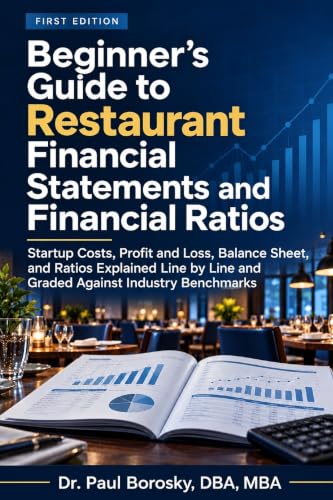
Beginner’s Guide to Restaurant Financial Statements and Financial Ratios
Where the money comes from, what each option really costs, and how to keep the payments from sinking a busy restaurant.