
Dr. Paul Borosky, DBA, MBA
Business Plan Writer · Business Consultant
What Is Prime Cost in a Restaurant? The Number That Decides Who Survives
A restaurant has hundreds of numbers. One of them matters more than the rest. Keep prime cost in line and most restaurants make money. Let it drift and nothing else can save you.
Written by Dr. Paul Borosky, DBA, MBA
The Definition
What Is Prime Cost?
Prime cost is the total of a restaurant’s cost of goods sold (food and beverage) and its total labor cost, including payroll taxes and benefits, expressed as a percentage of total sales.
Prime cost = (food and beverage cost + labor cost) ÷ sales
“Add up what went on the plates and what you paid the people who made and served them. Divide by what came in the door. That’s how much of every coin your kitchen eats before rent gets a bite.”
Need the answer fast? Read the gold Short Answer boxes and the numbered steps. Want the full picture? Follow Fast Frankie, a pizza-shop fox from Dr. Paul’s Fabled Forest, as he runs into the same prime cost trap real owners do. His story shows up in a few short gold notes along the way. The math sits in one section, clearly marked.
Get Your Restaurant Plan Written, or Build It Yourself
Lenders want covers, prime cost, and break even before they read the menu. Pick how you want to get there.
Business Consulting
Packed dining room and a thin bank balance? Dr. Paul helps restaurant owners sort out prime cost, cash, staffing, and menu pricing.
See consulting options →Business Plan Writing
FeaturedCovers by shift, prime cost, and break even, built into one plan your lender and landlord can follow. Dr. Paul writes it with you.
Start your plan →Restaurant Business Plan Template
A Word plan and an Excel model built around covers, check size, and food cost, with video tutorials for both.
See the template →Small Business Education
Free guides on funding, financial statements, and running the business, plus Dr. Paul’s plan-writing videos.
Start learning →From Dr. Paul’s Fabled Forest
Meet Frankie: Cheaper Dough, Bigger Payroll
Some lessons stick better as a story. Dr. Paul’s Fabled Forest is his business school told through a forest full of small business owners. Doctor Owl, a dry-witted consultant who lives in the Lone Oak, helps them fix the same problems real owners face. Today he catches Fast Frankie the fox, owner of Fast Frankie’s Fire-Baked Pizza, in the middle of the dinner rush.
FRANKIE: (sliding past with three pizzas) Doctor Owl! Can’t stop. Dinner rush. What do you need?
DOCTOR OWL: One question. Your flour bill went down. Why did your profit go down too?
FRANKIE: I hired two more cooks to make the dough from scratch. No more bagged dough. Cheaper!
DOCTOR OWL: How much cheaper?
FRANKIE: (balancing a pizza on one paw, counting on the other) A handful of coins a week on flour.
DOCTOR OWL: And the two cooks?
FRANKIE: …A lot more than a handful.
(The oven timer goes off. Frankie, for once, does not move.)
DOCTOR OWL: Flour and cooks are not two bills, Frankie. They are one bill. Add them together and look at it every week. That is your prime cost.
FRANKIE: So I saved a handful on flour to spend a pile on payroll.
DOCTOR OWL: You kneaded the money, and it did not rise.
An original Fabled Forest moment. Similar stories about Doctor Owl and the forest’s owners are in Operations for Small Businesses, Book 3 of Dr. Paul’s Fabled Forest Business School.
Frankie has a decision to make. Keep reading. You’ll see what he does, and why it works for your restaurant too.
Explore Dr. Paul’s Fabled Forest Books →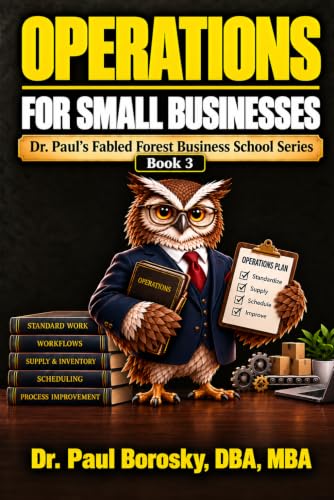 Similar stories in Operations for Small Businesses
Dr. Paul’s Fabled Forest Business School, Book 3
The Trap
Why Food Cost Alone Fools You
Food and labor trade off against each other. That’s the problem with watching only one of them.
Buy pre-cut vegetables
Food cost goes up. Labor goes down. Watch only food cost and it looks like you made things worse.
Make everything from scratch
Food cost drops. Labor climbs. Watch only food cost and you’ll think you saved money you didn’t.
Add a new shift
Brunch is packed, so it must be working. But new shifts bring new labor, and it often arrives faster than the sales.
Watch one cost and you can “fix” it by making the other one worse. Prime cost catches both.
That’s exactly what happened to Frankie. His flour bill looked great. His payroll told the real story.
Get It Right
What Counts as Labor in Prime Cost?
Different people count labor a little differently. That’s fine. What isn’t fine is counting it differently from one month to the next. Pick your list and stick to it.
- 1
Hourly kitchen and floor staff
Cooks, dishwashers, servers, bussers, hosts, and bartenders.
- 2
The payroll taxes on them
Wages are only part of what a person costs you. Count the taxes you pay on top.
- 3
Salaried managers who run shifts
A kitchen manager or a floor manager is labor too. Leave them out and your number looks better than your restaurant is doing.
- 4
Your own pay, kept separate
Many owners leave their own wage out so the number compares fairly year to year. Just decide once, and write it down.
Show the Math
How Do You Calculate Prime Cost Each Week?
Waiting for the monthly income statement means finding a problem five weeks after it started. A one-page weekly scorecard finds it in seven days. Every Monday, pull last week’s sales from the POS, food and beverage purchases from your invoices, and labor from payroll.
Here is an example week for a busy full-service restaurant. These are illustration numbers only.
| Line | Last week | Share of sales | Target |
|---|---|---|---|
| Sales | $26,500 | 100% | n/a |
| Food and beverage purchases | $8,900 | 33.6% | 32.0% |
| Hourly labor | $7,700 | 29.1% | 27.5% |
| Managers | $1,640 | 6.2% | 5.5% |
| Prime cost | $18,240 | 68.8% | 65.0% |
One page tells you where the week went. Food ran over target. So did hourly labor. Managers ran over because sales came in a little light for the salaries.
equals 1% of your yearly sales.
One extra pat of butter on every plate. One extra person on every brunch shift. Either one costs you a used car, every year.
Purchases for one week aren’t exactly what you used, because the walk-in can be fuller or emptier than last Monday. Over a few weeks it evens out. For an exact number, count the walk-in every Monday.
Five Fixes
Where Does Prime Cost Leak?
Prime cost rarely blows up all at once. It leaks, one habit at a time. Here’s where to look first.
- 1
Portions nobody measures
A spoon instead of a ladle. A handful instead of a scale. Every plate a little bigger than the recipe. Measure the big-cost items and the problem shrinks fast. See portion control.
- 2
A schedule copied from last week
Build the schedule from the cover forecast, not last week’s schedule. Stagger start times for the rushes. Cut early when it’s slow, and do it every slow night.
Frankie’s FixOne of his new cooks moved from the dinner line to the lunch rush, where Frankie never had enough hands.
- 3
Overtime nobody saw coming
Check every Wednesday who’s heading over 40 hours, then adjust the back half of the week.
- 4
A bar that free-pours
A generous pour adds liquor to every drink while the price stays the same. Put a jigger on every well, count the bar every Monday, and ring every comp into the POS.
- 5
Nobody owns the number
Give your kitchen manager the weekly food number and the authority to fix a recipe that’s running over. A number with no owner never gets fixed.
From Dr. Paul’s Consulting Work
What a Business Consultant Looks at First
When a restaurant owner brings Dr. Paul a cash problem, he doesn’t start with the menu or the marketing. He asks for one page: last week’s sales, food and beverage purchases, and labor. Most owners can’t produce it on the spot. That’s usually the first finding.
Some prime cost problems are math problems. A ladle fixes the hollandaise. A staggered schedule fixes the brunch rush. Those move fast once you can see them every week. Others aren’t math at all. Maybe it’s the Sunday crew who stayed with you through the hard first year, and you can’t bring yourself to cut them. That’s a real reason. It’s also a real cost.
Prime cost doesn’t decide anything for you. It shows you the price of each decision, so you pay it on purpose instead of by accident.
From Dr. Paul’s Fabled Forest
What Frankie Did Next
Monday morning, the bagged dough came back. One cook moved to lunch. The other stayed on dinner, where the ovens never stop.
A month later, Frankie slid a single sheet of paper across his counter to Doctor Owl. Flour, cooks, and sales, one line each, with one number circled at the bottom.
FRANKIE: Flour went up a little. Payroll went down a lot. And lunch finally has enough paws.
DOCTOR OWL: (studying the circled number) And you can see it.
FRANKIE: Every Monday. Before the rush.
The lesson for your restaurant: Cut one cost by raising the other and you haven’t saved a thing. Watch food and labor together, every week, and put your people where the sales are.
In Your Business Plan
How Do You Show Prime Cost in a Restaurant Business Plan?
Lenders read prime cost closely, because it’s the biggest share of restaurant spending. A plan that shows it clearly reads like an owner who understands the money, not just the menu.
- 1
Show it as a share of sales
Put food and beverage cost, labor, and prime cost in your financial projections, month by month.
- 2
Say what you count as labor
One line in your assumptions. It tells the reader you know the difference.
- 3
Name your target and how you’ll hold it
Recipe costing, a weekly scorecard, and a schedule built to covers.
- 4
Show what happens if it drifts
One scenario with prime cost a few points higher. It proves you understand your own risk.
Prime cost is one piece of the full plan. See How to Write a Restaurant Business Plan for every section, start to finish.
Want your prime cost built into a plan a lender trusts?Dr. Paul writes the plan and the projections around your menu, your schedule, and your covers.
Questions
Restaurant Prime Cost Questions
What is a good prime cost for a restaurant?
It depends on your concept, your menu, and your service style. Set a target in your plan, track against it every week, and watch the trend. A number that keeps creeping up is a problem even if it started out fine.
Does prime cost include the owner’s salary?
Some owners include it and some leave it out. Either works if you do it the same way every time, so your numbers compare fairly from month to month and year to year.
How often should I check prime cost?
Every week. A monthly income statement finds a problem five weeks after it started. A weekly scorecard finds it in seven days, while you can still fix it.
Beginner’s Guide to Restaurant Financial Statements and Financial Ratios
Prime cost, the weekly scorecard, the bar, the schedule, and the cash behind all of it, in plain English.