
Dr. Paul Borosky, DBA, MBA
Business Plan Writer · Business Consultant
Why Is My Restaurant Busy but Out of Cash? Profit Is a Score. Cash Is What You Spend.
The dining room is full. The income statement shows a profit. And there is not enough in the bank to make payroll. Here is where the money went.
Written by Dr. Paul Borosky, DBA, MBA
The Definition
What Is a Restaurant Cash Flow Problem?
A restaurant cash flow problem occurs when the business lacks enough cash to pay its obligations on time, even if it reports a profit. It arises because profit is measured when sales and expenses are recorded, while cash moves on a different schedule through inventory purchases, loan principal, owner draws, equipment, and money collected for others such as sales tax, tips, and gift cards.
“Profit is the score for the food you sold. Cash is the coins in the drawer. Some coins in the drawer belong to the tax collector. Some already left for the flour mill. Some went home with you. Count those before you count yourself rich.”
Need the answer fast? Read the gold Short Answer boxes and the numbered steps. Want the full picture? Follow Louie Waffles, the big-hearted Labrador who runs Waffle Woofs Bakery & Café, from Dr. Paul’s Fabled Forest, as his best month ever is followed by a month he cannot pay the mill. The story shows up in a few short gold notes along the way. The math sits in one section, clearly marked.
Get Your Restaurant Plan Written, or Build It Yourself
Lenders want covers, prime cost, and break even before they read the menu. Pick how you want to get there.
Business Consulting
Packed dining room and a thin bank balance? Dr. Paul helps restaurant owners sort out prime cost, cash, staffing, and menu pricing.
See consulting options →Business Plan Writing
FeaturedCovers by shift, prime cost, and break even, built into one plan your lender and landlord can follow. Dr. Paul writes it with you.
Start your plan →Restaurant Business Plan Template
A Word plan and an Excel model built around covers, check size, and food cost, with video tutorials for both.
See the template →Small Business Education
Free guides on funding, financial statements, and running the business, plus Dr. Paul’s plan-writing videos.
Start learning →From Dr. Paul’s Fabled Forest
Meet Louie: The Best Month Ever
Some lessons stick better as a story. Dr. Paul’s Fabled Forest is his business school told through a forest full of small business owners. Doctor Owl, a dry-witted consultant who lives in the Lone Oak, helps them fix the same problems real owners face. Today he finds Louie Waffles behind the Waffle Woofs counter on a gray morning, staring at a bill from the flour mill.
LOUIE: (holding the bill like it might bite) I don’t understand it, Doctor Owl. Last month was the best month Waffle Woofs ever had. Every table full, every night.
DOCTOR OWL: And this month?
LOUIE: This month I can’t pay the mill.
DOCTOR OWL: Where did last month’s coins go?
LOUIE: (counting on his paw) Well. I bought extra flour, because we were so busy. I paid off the new griddle. I took a little extra home, because it was such a good month.
DOCTOR OWL: And the coins you collected for the tax collector?
LOUIE: Those were in the drawer. I thought they were mine.
Louie’s tail, for once, is perfectly still.
DOCTOR OWL: Your restaurant made money, Louie. Then it spent it. Some of it was never yours to spend.
An original Fabled Forest moment. Similar stories about Doctor Owl and the forest’s owners are in Accounting and Finance for Small Businesses, Book 2 of Dr. Paul’s Fabled Forest Business School.
Louie has a decision to make. Keep reading. You’ll see what he does, and why it works for your restaurant too.
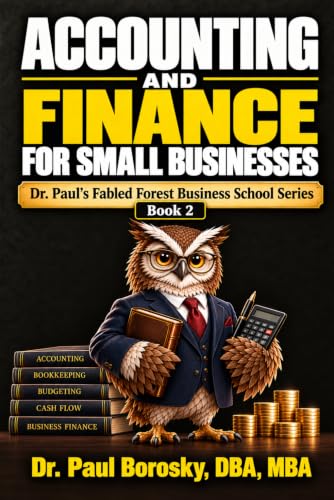 Similar stories in Accounting and Finance for Small Businesses
Dr. Paul’s Fabled Forest Business School, Book 2 See the Books →
The Gap
Why the Bank Balance Lies
The bank balance is true. It is just not the truth you need. On any given day, it includes money that is not yours: sales tax you owe the state, tips you pay out Friday, gift cards someone will use next month. It leaves out card deposits that land tomorrow. And it says nothing about the bills that are coming.
“If the restaurant is profitable, the money is in the account.”
Cash is what is left after everything the restaurant paid for, including things that never show up on the income statement.
Louie had a great month on paper. Then the extra flour, the griddle payment, the money he took home, and the tax collector’s share all left the drawer at once.
Show the Math
Where Does the Cash Go Between Profit and the Bank?
Here is a full first year for a busy restaurant, from opening-day cash to year-end cash. Illustration numbers only.
| Line | Amount |
|---|---|
| Cash on opening day | $67,000 |
| Plus: net profit | $32,000 |
| Plus: depreciation (a cost, but no check written) | $32,400 |
| Less: card deposits not landed yet | ($6,000) |
| Less: food and drinks on the shelves | ($14,000) |
| Plus: supplier bills not paid yet | $10,000 |
| Plus: taxes, tips, and gift cards collected, not paid yet | $21,600 |
| Less: walk-in compressor and ice machine | ($20,000) |
| Less: loan principal paid | ($18,000) |
| Less: owner draws | ($84,000) |
| Cash at the end of year one | $21,000 |
The restaurant made $32,000. The owner took out $84,000. And $21,600 sitting in the account belonged to the state, the staff, and gift card holders. On paper, a good first year. In the bank, almost nothing that was really the owner’s.
Five Fixes
How Do You Fix Restaurant Cash Flow?
- 1
Separate the money that is not yours
Sales tax and tips go into their own account the day they come in.
Louie’s FixLouie opened a second account at the First Bank. The tax collector’s share goes in every night now.
- 2
Pay yourself a set amount
A fixed owner pay on a schedule, not whatever the balance allows. See how much to pay yourself.
- 3
Order to the menu, not the walk-in
Food on the shelf is cash you cannot spend.
- 4
Plan the big purchases
Equipment and loan principal take cash that never shows up as an expense. Put them on the calendar.
- 5
Forecast cash every week
A simple weekly forecast warns you about February in November.
From Dr. Paul’s Work as a Business Consultant
What a Business Consultant Sees in a Busy Restaurant
When a restaurant owner tells Dr. Paul they are busy but broke, the first question is not about sales. It is where the money went after it came in.
The answer is almost never a mystery. It is a handful of things that are easy to see once someone lays them out side by side: inventory, equipment, loan principal, owner draws, and money held for others.
A full dining room does not tell you whether you can make payroll. A weekly cash forecast does.
From Dr. Paul’s Fabled Forest
What Louie Did Next
At the end of the next month, Louie paid the flour mill on time. He wrote the date on the bill, just to remember it.
LOUIE: Two accounts now. One for the tax collector. One for Waffle Woofs. I don’t touch the first one.
DOCTOR OWL: And what you take home?
LOUIE: (a little proud) Same amount every week. Even after a great week.
DOCTOR OWL: Especially after a great week.
The lesson for your restaurant: Profit is a score. Cash is what you can spend. Separate the money that is not yours, pay yourself on a schedule, and forecast your cash every week.
In Your Business Plan
How Does Cash Flow Go in Your Business Plan?
Most restaurant plans show profit. Strong ones show cash too. Related guides: Should a Restaurant Lease or Buy Equipment?.
- 1
Include a cash flow projection
Month by month, separate from the profit and loss.
- 2
Show owner pay as a set amount
Not “whatever is left.”
- 3
Show loan principal and equipment
They use cash even though they are not expenses.
- 4
Show the cushion
The lowest your cash goes, and when.
This is one piece of the full plan. See How to Write a Restaurant Business Plan for every section, start to finish.
Busy restaurant, thin bank balance?Dr. Paul works with restaurant owners to find where the cash goes and build a forecast that warns them early.
Questions
Restaurant Cash Flow Questions
Why is my restaurant profitable but has no cash?
Profit and cash are different. Cash goes to inventory, equipment, loan principal, and owner draws, none of which reduce profit, and some money in your account belongs to others, like sales tax and tips.
How do I improve cash flow in a restaurant?
Separate sales tax and tips, pay yourself a set amount, order inventory to the menu, plan big purchases, and forecast cash every week.
What is a cash flow forecast?
A week-by-week estimate of cash coming in and going out, so you can see a shortfall before it happens.
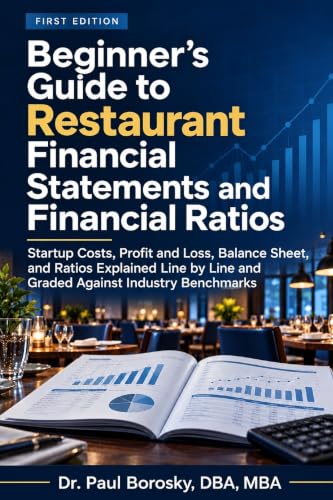
Beginner’s Guide to Restaurant Financial Statements and Financial Ratios
Why profit is not cash, where the money goes, and how to keep a busy restaurant from running dry.