
Dr. Paul Borosky, DBA, MBA
Business Plan Writer · Business Consultant
How Do You Read a Restaurant Income Statement? Read It Like a Recipe, One Line at a Time
Most owners look at two lines, sales at the top and profit at the bottom. That is like tasting a dish and only noticing the salt.
Written by Dr. Paul Borosky, DBA, MBA
The Definition
What Is a Restaurant Income Statement?
A restaurant income statement, also called a profit and loss statement or P&L, is a financial report that shows revenue, expenses, and net profit or loss over a period such as a month, quarter, or year. It is organized in layers: revenue, cost of goods sold, gross profit, operating expenses or overhead, and net profit.
Net profit = revenue − cost of goods sold − overhead − interest
“It is the scorecard for the food. Top line: everything you sold. Next: what it cost to make and serve it. Then: what it costs to keep the doors open. Whatever is left at the bottom is the score. It is not a picture of your bank account.”
Need the answer fast? Read the gold Short Answer boxes and the numbered steps. Want the full picture? Follow Peppy the parrot, who runs a bright ice cream and funnel cake cart, from Dr. Paul’s Fabled Forest, as he reads only the first and last line of his P&L, and gets the wrong idea from both. The story shows up in a few short gold notes along the way. The math sits in one section, clearly marked.
Get Your Restaurant Plan Written, or Build It Yourself
Lenders want covers, prime cost, and break even before they read the menu. Pick how you want to get there.
Business Consulting
Packed dining room and a thin bank balance? Dr. Paul helps restaurant owners sort out prime cost, cash, staffing, and menu pricing.
See consulting options →Business Plan Writing
FeaturedCovers by shift, prime cost, and break even, built into one plan your lender and landlord can follow. Dr. Paul writes it with you.
Start your plan →Restaurant Business Plan Template
A Word plan and an Excel model built around covers, check size, and food cost, with video tutorials for both.
See the template →Small Business Education
Free guides on funding, financial statements, and running the business, plus Dr. Paul’s plan-writing videos.
Start learning →From Dr. Paul’s Fabled Forest
Meet Peppy: The Top and the Bottom
Some lessons stick better as a story. Dr. Paul’s Fabled Forest is his business school told through a forest full of small business owners. Doctor Owl, a dry-witted consultant who lives in the Lone Oak, helps them fix the same problems real owners face. Today he finds Peppy the parrot perched on his cart, holding his first-ever profit and loss statement upside down.
PEPPY: (turning it right side up) Doctor Owl! My bookkeeper gave me a P and L! Look at the top! Look how big!
DOCTOR OWL: Sales. Very good. And the bottom?
PEPPY: Small. Very small. But the top is big!
DOCTOR OWL: What is in the middle?
PEPPY: I don’t read the middle. The middle is boring.
Doctor Owl taps a line halfway down the page.
DOCTOR OWL: This line says you spent more on funnel cake oil than on the funnel cake flour.
PEPPY: That can’t be right. Oil is cheap!
DOCTOR OWL: It is when you change it once a week. Not every afternoon.
PEPPY: (very small voice) Oh.
An original Fabled Forest moment. Similar stories about Doctor Owl and the forest’s owners are in Accounting and Finance for Small Businesses, Book 2 of Dr. Paul’s Fabled Forest Business School.
Peppy has a decision to make. Keep reading. You’ll see what he does, and why it works for your restaurant too.
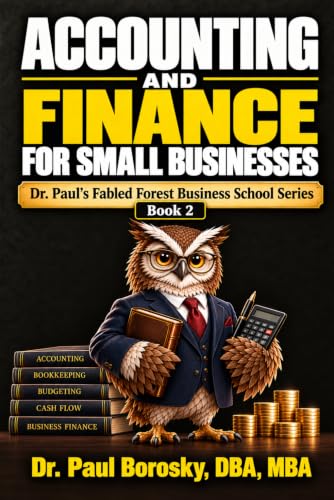 Similar stories in Accounting and Finance for Small Businesses
Dr. Paul’s Fabled Forest Business School, Book 2 See the Books →
Three Layers
How Is a Restaurant Income Statement Organized?
Read it top to bottom, in three layers. One warning: layouts differ. Many bookkeepers put only food and beverage in cost of goods sold and show labor further down. Net profit comes out the same either way.
- 1
Revenue
Everything you sold in the period. Not what was deposited. What you sold.
- 2
Cost of goods sold
Costs that rise and fall with every guest: food, beverage, hourly labor, card fees, supplies. What is left is gross profit.
- 3
Overhead
Costs of keeping the doors open: rent, utilities, insurance, and the rest. Subtract them, then interest, and you have net profit.
Peppy read the top and the bottom and skipped the layer that held the answer.
Show the Math
What Does a Restaurant Income Statement Look Like?
Here is a first quarter for a new 70-seat restaurant. It was packed on Saturdays, and it still lost money. Illustration numbers only.
| Line | Amount | % of sales |
|---|---|---|
| Total revenue | $252,000 | 100% |
| Food and beverage cost | ($85,700) | 34.0% |
| Hourly labor, with payroll taxes | ($71,100) | 28.2% |
| Card fees, supplies, delivery commissions | ($15,000) | 6.0% |
| Gross profit | $80,200 | 31.8% |
| Overhead: rent, utilities, insurance, staff, marketing, repairs, depreciation | ($66,000) | |
| One-time opening costs | ($23,500) | |
| Interest | ($5,400) | |
| Net loss | ($14,700) |
Read it down. Revenue was strong. Food cost was on plan. Labor ran a little high, which is normal while a new crew learns. The loss came from one line: one-time opening costs. Without them, the quarter made money.
Compared to what? Compared to last month, to the same month last year, and to your plan. A number on its own tells you almost nothing.
Read It Monthly
What Should You Look for on Your P&L?
- 1
Food cost as a share of sales
Is it drifting up? Check your top sellers and your portions.
- 2
Labor as a share of sales
Is the schedule built to covers?
- 3
Prime cost
Food plus labor together. The number that decides survival. See prime cost.
- 4
One-time items
Separate them so they do not hide how the restaurant really performs.
- 5
The trend, not the month
Three months in a row tells you more than one bad month.
Peppy’s FixPeppy changed the fryer oil on a schedule, and read the middle of his P&L every month after that. He says it is less boring now that it is about him.
From Dr. Paul’s Work as a Business Consultant
How a Business Consultant Reads Your P&L
When Dr. Paul opens a restaurant’s income statement, he reads it the way a chef reads a recipe: one line at a time, each one compared to plan and to last month.
The answer to “why are we losing money” is almost always in the middle of the page, the part most owners skip.
The income statement is the scorecard for the food. It is not a picture of your bank account. Read both, every month.
From Dr. Paul’s Fabled Forest
What Peppy Did Next
The next month, Peppy flew to the Lone Oak with his new P&L, right side up.
PEPPY: (pointing with a wing) The oil line is small now! Look!
DOCTOR OWL: And the bottom line?
PEPPY: Bigger. And I know why. That’s the best part.
DOCTOR OWL: And the middle?
PEPPY: Still boring. But it’s my boring.
The lesson for your restaurant: Read the whole income statement, not just the top and the bottom. The answer to “why” is almost always in the middle.
In Your Business Plan
How Does the Income Statement Go in Your Business Plan?
In a business plan, the income statement becomes a projection: a pro forma P&L. Related guides: How Much Should a Restaurant Owner Pay Themselves?, How Many Customers Does a Restaurant Need to Break Even? and What Does It Cost to Open a Second Restaurant?.
- 1
Project it month by month for year one
Then yearly for the next few years.
- 2
Build revenue from covers and average check
By shift, not one big number.
- 3
Show food, labor, and prime cost as a share of sales
Lenders compare them to what restaurants usually run.
- 4
Separate one-time opening costs
So the reader can see how the restaurant performs once it is open.
This is one piece of the full plan. See How to Write a Restaurant Business Plan for every section, start to finish.
Want someone to walk through your P&L with you?Dr. Paul works with restaurant owners to read the numbers and turn them into decisions.
Questions
Restaurant Income Statement Questions
What is on a restaurant income statement?
Revenue, cost of goods sold, gross profit, overhead, interest, and net profit or loss for a period of time.
What is the difference between an income statement and cash flow?
The income statement shows profit. Cash flow shows money actually coming in and going out. A restaurant can be profitable and still short on cash.
How often should I review my restaurant P&L?
Every month, compared to your plan and to the same month last year, plus a simple weekly check on prime cost.
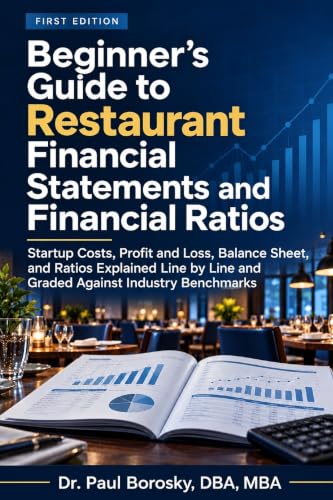
Beginner’s Guide to Restaurant Financial Statements and Financial Ratios
How to read the income statement, the balance sheet, and the cash flow statement, and how they fit together.