
Dr. Paul Borosky, DBA, MBA
Business Plan Writer · Business Consultant
How to Write a Coffee Shop Business Plan Built on Tickets, Cup Cost, and the Morning Rush
A coffee shop does not sell coffee by the pound. It sells tickets, most of them in a two hour morning window. Build the plan around tickets per day, average ticket, cost per cup, and how many drinks your bar can make before the line walks out.
Last Updated: 10/30/2026 · Written by Dr. Paul Borosky, DBA, MBA
Watch First
Watch: How to Write a Coffee Shop Business Plan
Coffee Shop Business Plan Template
Editable Word plan plus an Excel financial model built for a coffee shop. Plug in your tickets, average ticket, and costs, and the projections follow.
- Word business plan plus a video tutorial that walks you through every section
- Excel financial model plus a video tutorial that shows you how to enter your numbers
An AI template hands you a blank file and walks away. This one comes with Dr. Paul showing you how to fill in the plan and the model, on video.
The Problem
Why Do Coffee Shop Business Plans Get Turned Down?
Most coffee shop plans sell the vibe: the beans, the seating, the music. Lenders want tickets per day, average ticket, cost per cup, labor by shift, and the ticket count where the shop breaks even. Show those and the plan holds up.
Here is the trap. A cup of coffee costs little to make, so the margin looks huge. But a coffee shop sells small tickets, pays rent every day, and makes most of its money in a short morning rush. If the bar cannot keep up, customers leave and do not come back. Dr. Paul has written 1,000+ business plans over 14+ years, and the coffee shop plans that struggle skip the same step: running the cup math and the rush hour math together. The calendar matters too, especially for coffee shops that run on a semester calendar.
Great coffee gets people in the door. Tickets, cup cost, and capacity keep the doors open. That is what a banker reads.
Planning a Coffee Shop? Start Here
Five Fixes
How Do You Make a Coffee Shop Business Plan Work?
1. Build revenue from tickets by daypart
Do not start with a yearly sales goal. Start with tickets: the morning rush, midday, and the afternoon. Multiply each by an honest average ticket and the days you are open.
2. Cost every drink by the cup
Espresso, milk, syrup, the cup, the lid, the sleeve. Add them up for each size of each drink. Price from that cost, and recheck it whenever milk or bean prices move.
3. Plan the rush hour capacity
Figure how many drinks your bar can make per hour with the machines and baristas you plan to have. If morning demand runs past that, the line walks. Show the plan has enough bar to serve the peak.
4. Raise the average ticket, not just the count
Food, pastries, larger sizes, and bags of beans lift every ticket. A small bump in average ticket across hundreds of customers a day adds up fast. Show the add ons in the menu and the math.
5. Show break even tickets per day
Lenders want this number. In the example below, the shop breaks even at about 193 tickets a day against a plan of 250. That gap is the cushion that carries you through a slow winter or a road closure.
Section by Section
What Goes in a Coffee Shop Business Plan?
Every coffee shop plan follows the same sections as any business plan. Here is what each one needs for a coffee shop. Each heading links to the full guide for that section.
- 1
Executive summary
The shop, location, daily ticket target, average ticket, funding needed, and break even tickets per day. Write it last. Choosing between intown vs suburban cafe sites changes every one of those numbers.
- 2
Company description
Legal structure, ownership, hours, seating, drive thru or walk up, and what you serve beyond coffee.
- 3
Target market
Commuters, office workers, students, and remote workers within walking or driving distance, by time of day.
- 4
Market analysis
Chains and independents nearby, their prices, their lines at rush hour, and the traffic count on your street.
- 5
Marketing plan
How you win the morning habit: a loyalty program, a Google Business Profile, mobile ordering, and local events.
- 6
Management and staffing
Your coffee experience, barista roles, training, and how many people you put on bar during the rush.
- 7
Financial projections
Tickets by daypart, average ticket, cost per cup, labor by shift, and break even tickets per day.
- 8
Funding request
Build out, espresso machine and grinders, permits, opening inventory, and working capital while regulars find you.
Example Numbers
How Much Profit Does a Coffee Shop Make per Month?
These are example numbers only, built to show how the math works. Assumptions: open 30 days a month, 250 tickets a day at a $7.50 average ticket, drink and food cost at 3% of sales, card fees at 3%, and 31 barista hours a day at $14 an hour plus 12% payroll taxes. Health permits, food rules, and wage laws vary by state and city, so check yours.
| 16 oz latte, by the cup | Cost |
|---|---|
| Double espresso shot | $0.40 |
| Milk | $0.55 |
| Cup, lid, and sleeve | $0.30 |
| Syrup | $0.20 |
| Cost per cup, sold at $5.25 | $1.45 (28% of the price) |
| Line | How it is figured | Monthly |
|---|---|---|
| Sales | 250 tickets × $7.50 × 30 days | $56,250 |
| Drink and food cost | Sales × 3% | $16,875 |
| Barista labor | 31 hours × $14 × 1.12 × 30 days | $14,582.40 |
| Card fees | Sales × 3% | $1,687.50 |
| Fixed costs | Manager $4,200 + rent $5,500 + utilities $1,400 + insurance $400 + equipment loan $1,200 + marketing $600 + other $1,200 | $14,500 |
| Monthly profit before owner pay and taxes | Sales minus all costs | $8,605.10 |
In this example, 4% of tickets land in a 2 hour morning rush. That is 50 drinks an hour against a bar that can make about 60. Tight, but it works. Drop below about 193 tickets a day and the shop loses money. Put both numbers in the plan.
Avoid These
What Are the Biggest Coffee Shop Business Plan Mistakes?
- Selling the vibe instead of the numbers. The atmosphere matters. Tickets per day get the loan.
- Pricing off the chain down the street. Price from your own cup cost, not someone else's menu board.
- Ignoring rush hour capacity. A bar that tops out below morning demand loses sales you never see.
- Counting on campers to pay the rent. Seats filled by one drink all afternoon do not lift sales. Plan the seating and the hours around tickets.
- Picking the location last. Morning traffic on the commuter side of the street can make or break a shop. Study the traffic before you sign the lease.
- Staffing the slow afternoon like the rush. Overstaffing mid afternoon quietly drains the profit the morning made. Schedule labor to the hour by hour sales curve.
- No plan for repeat visits. Coffee is a habit business. Build loyalty and order ahead into the marketing plan from day one.
Real World Use
How a Coffee Shop Owner Uses This Plan
One barista on bar or two, same morning line
Say your shop sees about 75 drink orders an hour during a 2 hour morning rush, plus 120 tickets the rest of the day. Your average ticket is $7 and fixed costs run $16,500 a month.
With one barista on bar making about 40 drinks an hour, you serve 80 rush customers and 70 walk out. That is 200 tickets a day, $42,000 a month, and a monthly loss of $590.40.
Add a second barista through the rush and the bar makes about 70 drinks an hour. You serve 140 rush customers, 260 tickets a day, $54,600 a month, and $5,970 in monthly profit after paying the extra hours. Show the bank that math. These figures are an example only.
Around Norman, the University of Oklahoma is the main employer, and student and staff spending drives local food and retail demand. A campus area cafe plan should show that, as the Oklahoma business plan writer explains.
Keep Going
More Videos in This Series
How to Use a Coffee Shop Business Plan Template
Dr. Paul shows how to customize the coffee shop template for your own shop. (12:50)
Coffee Shop Pro Forma Financial Projections in 30 Minutes
He builds coffee shop projections and a profit and loss statement in Excel. (15:14)
Questions
Coffee Shop Business Plan Questions
How do I write a business plan for a coffee shop?
How much does it cost to make a cup of coffee?
How many customers does a coffee shop need per day to break even?
Is a coffee shop a profitable business?
Do I need a business plan to get a loan for a coffee shop?
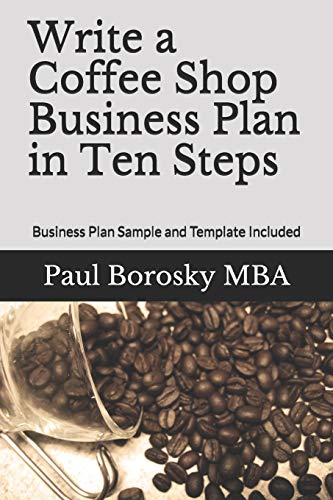
Your coffee shop plan follows ten clear steps.
Dr. Paul's Write a Coffee Shop Business Plan in Ten Steps walks you through a full coffee shop sample plan, section by section. For the general method behind every plan, his How to Write a Business Plan in Ten Steps, Fifth Edition adds a Using AI box in every step. Pair either with the coffee shop template and you have the structure and the numbers.
Written by Dr. Paul Borosky, DBA, MBA, current college professor, business consultant, and author with 14+ years and 1,000+ businesses served.
This page is for general educational purposes only. It is not financial, investment, legal, or tax advice.