
Dr. Paul Borosky, DBA, MBA
Business Plan Writer · Business Consultant
How to Write a Grocery Store Business Plan Where Shrink Decides the Bottom Line
A grocery store moves a lot of money and keeps very little of it. A few points of spoiled produce or missing meat can wipe out the profit. Build the plan around departments, margin and shrink in each one, and the sales you need to break even.
Last Updated: 10/30/2026 · Written by Dr. Paul Borosky, DBA, MBA
Watch First
Watch: How to Write a Grocery Store Business Plan
Grocery Store Business Plan Template
Editable Word plan plus an Excel financial model built for a grocery store. Plug in your departments, margins, and costs, and the projections follow.
- Word business plan plus a video tutorial that walks you through every section
- Excel financial model plus a video tutorial that shows you how to enter your numbers
An AI template hands you a blank file and walks away. This one comes with Dr. Paul showing you how to fill in the plan and the model, on video.
The Problem
Why Do Grocery Store Business Plans Get Turned Down?
Most grocery plans use one margin for the whole store and leave shrink out. Lenders want sales and margin by department, a shrink number for perishables, labor hours, and the sales level where the store breaks even. Show those and the plan holds up.
Here is the trap. Big weekly sales look strong on paper. But dry goods earn a thin margin, perishables spoil, and refrigeration runs all night. Profit is a small slice of a large number, so small mistakes matter. Dr. Paul has written 1,000+ business plans over 14+ years, and the grocery plans that struggle all skip the same step: planning margin and shrink department by department.
A strong grocery store business plan turns the idea into department sales, margin after shrink, labor hours, and inventory turns. That is the language bankers read.
Starting a Grocery Store? Begin Here
Five Fixes
How Do You Make a Grocery Store Business Plan Work?
1. Plan sales by department
Dry grocery, produce, meat, dairy and frozen, deli and bakery, and general merchandise each carry their own margin. Project the share of sales in each one. The mix decides the store's real margin.
2. Put shrink in every perishable department
Produce wilts, meat expires, and baked goods go stale. Put a shrink rate on each department and explain how you control it: ordering to sales, rotation, markdowns, and daily checks.
3. Staff by labor hours
Payroll is your largest cost after product. Plan hours by day for cashiers, stockers, and each fresh department. Tie the schedule to your busiest hours and your truck deliveries.
4. Show inventory turns and supplier terms
Groceries turn fast, but opening stock is still a large check. Show how many times a year you turn inventory, what your wholesaler requires, and the cash tied up on the shelves.
5. Show break even sales
In the example below, the store breaks even at about $340,000 a month. That leaves a cushion of only 6% below plan. Lenders want to see that you know how thin it is.
Section by Section
What Goes in a Grocery Store Business Plan?
Every grocery plan follows the same sections as any business plan. Here is what each one needs for a grocery store. Each heading links to the full guide for that section.
- 1
Executive summary
The store, the neighborhood, store size, sales target, funding needed, and break even. Write it last.
- 2
Company description
Legal structure, ownership, store format, departments, hours, and any wholesaler or co op you will buy through.
- 3
Target market
Households within a short drive, their shopping habits, and any specialty or ethnic foods they cannot find nearby.
- 4
Market analysis
Supermarkets, discounters, dollar stores, and delivery services near you, and what each one does poorly.
- 5
Marketing plan
Weekly ad, in store specials, loyalty program, community events, and a Google Business Profile.
- 6
Management and staffing
Department leads, receiving and stocking schedule, food safety training, and staff hours by day.
- 7
Financial projections
Sales by department, margin and shrink by department, labor hours, utilities, and break even sales.
- 8
Funding request
Build out, refrigeration, shelving, POS, opening inventory, and working capital.
Example Numbers
How Much Does a Grocery Store Make per Month?
These are example numbers only, built to show how the math works. Assumptions: $360,000 in monthly sales, 100 staff hours a day for 30 days at $15 an hour plus 12% payroll taxes, and card fees at 2.2% of sales. Food safety permits, beer and wine licenses, and sales tax on food vary by state and city, so check yours.
| Department | Monthly sales | Example margin | Example shrink | Gross profit after shrink |
|---|---|---|---|---|
| Grocery (dry goods) | $140,400 | 27% | 1% | $36,504 |
| Produce | $43,200 | 38% | 6% | $13,824 |
| Meat and seafood | $54,000 | 3% | 4% | $14,040 |
| Dairy and frozen | $57,600 | 28% | 2% | $14,976 |
| Deli and bakery | $28,800 | 48% | 8% | $11,520 |
| Health, beauty, and general | $36,000 | 36% | 1% | $12,600 |
| Store total | $360,000 | 28.7% kept after shrink | $103,464 | |
| Line | How it is figured | Monthly |
|---|---|---|
| Gross profit after shrink | Sum of departments | $103,464 |
| Card fees | $360,000 × 2.2% | $7,920 |
| Store payroll | 100 hours × 30 days × $15 × 1.12 | $50,400 |
| Fixed costs | Manager $6,000 + rent $16,000 + utilities $9,500 + insurance $2,000 + supplies $2,500 + other $3,500 | $39,500 |
| Monthly profit before owner pay and taxes | Gross profit minus all costs | $5,644 |
Profit here is 1.6% of sales. Shrink costs $9,972 a month, more than the store earns. At 14 turns a year, about $211,340.57 in inventory sits in the store at cost. Show the bank the $340,000 break even line and the controls that keep shrink where you planned it.
Avoid These
What Are the Biggest Grocery Store Business Plan Mistakes?
- Using one margin for the whole store. Departments earn very different margins. Build them one by one.
- Leaving shrink out of perishables. Spoilage and theft are certain. Plan the rate and the controls.
- Underestimating utilities. Coolers and freezers run every hour. Get real estimates for the building.
- Overstocking fresh departments. Order to sales, not to fill the case. Extra stock turns into waste.
- Ignoring the competition next door. Show why shoppers will drive past a supermarket or discounter to reach you.
Real World Use
How a Grocery Store Owner Uses This Plan
Same store, same sales, two shrink results
Say you run the example store at $360,000 a month. Your plan calls for shrink of 6% in produce, 4% in meat, and 8% in deli and bakery, and the store earns $5,644 before owner pay.
Tighten ordering and rotation and get those rates to 4%, 3%, and 5%. Profit rises to $7,912 a month with no new customers. Let them slip to 12%, 8%, and 15% and the same store loses $1,124 a month.
Sales did not change. Shrink did. Put department shrink targets in the plan, track them weekly, and show the bank who owns each one. These figures are an example only.
East Hawaii farms grow macadamia nuts, papaya, flowers and coffee, which gives island retailers and grocers local products to stock. Sourcing ideas are part of planning a business for Hawaii.
Keep Going
More Videos in This Series
What Is in the Grocery Store Business Plan Template
Dr. Paul walks through the grocery store template and its Excel financial model. (8:51)
Questions
Grocery Store Business Plan Questions
How do I write a business plan for a grocery store?
How much does it cost to open a grocery store?
What is the profit margin of a grocery store?
How do grocery stores reduce shrink?
Do I need a business plan for a grocery store loan?
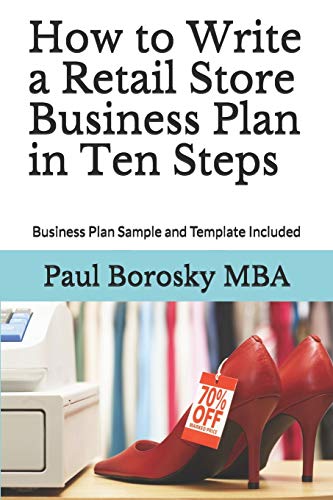
Your grocery store plan follows the same ten steps.
Dr. Paul's How to Write a Retail Store Business Plan in Ten Steps walks you through every section with a full retail sample plan. For the general method, his How to Write a Business Plan in Ten Steps, Fifth Edition covers each section in order. Pair either with the grocery store template and you have the structure and the numbers.
Written by Dr. Paul Borosky, DBA, MBA, current college professor, business consultant, and author with 14+ years and 1,000+ businesses served.
This page is for general educational purposes only. It is not financial, investment, legal, or tax advice.