
Dr. Paul Borosky, DBA, MBA
Business Consultant & Author
How to Start a Business
Ten steps, in the order lenders, landlords and the state expect you to do them.
Starting a business is one of the best decisions you can make. Do it in the right order and the bank, the landlord and the state all say yes. Here is the order. You can do this.
Need help now? Call or text (321) 948-9588. Dr. Paul answers personally.
Last Updated: 10/28/2026 · Written by Dr. Paul Borosky, DBA, MBA
The Short Answer
How Do You Start a Business? Plan It, Organize It, Then Grow It.
Dr. Paul has helped 1,000+ owners start, fund and grow their businesses over 14 years. The owners who win do the simple steps first. This page gives you those steps in order. Most steps point to the book or template that goes deeper.
Steps 1 to 3
Plan
Prove the idea, write the plan, and build the numbers. This is what lenders read first, and it is where you get to dream with a pencil.
Steps 4 to 9
Organize
Register it, fund it, license it, set up the books, win the first customers, and write the business down so it runs without you.
Step 10
Grow
Expand with confidence. Rebuild the projections for every move before you make it.
You do not need all ten today. You need to know which one you are on. The ten steps follow Dr. Paul's Organize-Plan-Grow™ Strategy: plan the business, organize it, then grow it. Follow the order and every door opens a little easier.
Steps 1 to 3
Plan
Prove the idea, write the plan, build the numbers.
How to Validate a Business Idea
An idea is not a business. A business is a customer who pays you more than it costs to serve them. The good news: you can find out before you spend a dollar. Just ask.
Write your one-sentence promise: "We help [customer] do [result] without [pain]."
- Name the one problem you solve and who has it.
- Talk to 10 people who have that problem. Ask what they do about it today and what it costs them.
- Count how many of those 10 would pay. Fewer than 3, change the offer or the customer.
- Check who already serves them. Find the gap: price, speed, location, trust.
- Write a one-sentence promise: "We help [customer] do [result] without [pain]."
That sentence becomes the first line of your business plan. If you cannot write it, you are not ready for Step 2.
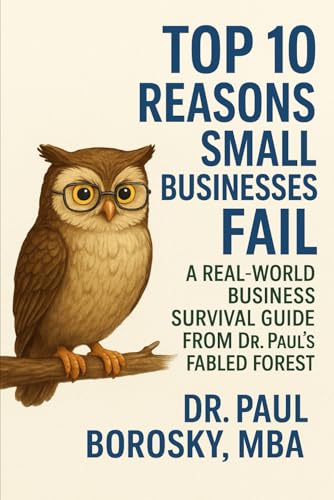

Want to test your idea? Read Top 10 Reasons Small Businesses Fail and Top 5 Common Mistakes Entrepreneurs Make first.
How to Write a Business Plan
The plan is not for you. It is for the banker, the landlord, the investor, and the partner who all want to see you thought this through. Show up with one and the conversation gets easy.
Start with the company description and the market analysis. Write the executive summary last.
Dr. Paul has written 1,000+ of them. Every plan that got funded had the same seven parts:
Dr. Paul also believes every plan needs a short strategic plan: where you want to be in three years and the three moves that get you there. Most templates skip it. Lenders notice when it is there.
Want to see how each section reads? The business plan writing tutorials walk through them one at a time.

Need a business plan? Grab a done-for-you template, or read How to Write a Business Plan in Ten Steps.
How to Create Financial Projections for a New Business
Here is where plans get strong. Real numbers turn a good idea into a yes from the banker.
Add up your startup number: equipment, build-out, deposits, inventory, licenses, and three to six months of cash.
Projections are a model of your business before it exists. They answer four questions:
A lender wants three years, month by month for year one. They also want your assumptions written down so they can argue with them. If you cannot explain where a number came from, do not put it in.
Want to build them yourself? Start with the pro forma financial projections tutorials.

Want to love your numbers? Beginner's Guide to Small Business Finance follows one owner from startup costs to growth.
Steps 4 to 9
Organize
Make it legal, funded, and ready to run.
How to Register a Business and Choose a Business Structure
You cannot open a business bank account, sign a lease, or apply for a loan as "me." The state and the IRS need to know who the business is.
Get your EIN from the IRS. It is free and takes ten minutes online.
Each state does this a little differently. Check your Secretary of State's website for the exact forms and fees.
How to Get Funding to Start a Business
The number one question Dr. Paul hears: "Where do I get the money?" The honest answer is that it depends on how much you need, how much you have, and what you can prove on paper.
Write down how much you need and how much you can put in yourself.
Here is the ladder, bottom to top. Most owners climb two or three rungs, not all of them.
Whatever rung you pick, the paperwork is the same: a plan and three years of projections. That is Steps 2 and 3. Do them first and the funding conversation gets short.
Need to get lender-ready? A business plan template is the plan and the model the bank asks for.
What Licenses and Permits Do You Need to Start a Business
Do this step early and opening day is a party, not a surprise. Here is the checklist.
Look up your city or county business license page and your state's license list for your industry.
The list depends on your industry and your address. Almost every business needs some of these:
Insurance belongs here too. General liability is the floor. Add workers' comp the day you hire, and commercial auto the day a vehicle does business work. Landlords and clients will ask for a certificate before they sign.
Budget the fees and the time. Some state licenses take months. Put them in the projections from Step 3 so the money is there.
How to Set Up Accounting for a Small Business
Know how your business is doing every month, not just in April. It feels great.
Open the business bank account and keep every dollar separate from day one.
Set this up before the first sale, not after:
- Business bank account and a business credit card. Nothing personal touches them.
- Bookkeeping software. QuickBooks Online or Xero. Pick one and stop shopping.
- A chart of accounts that matches your projections. Same categories, same names. Then every month you can see plan versus actual without a translator.
- A monthly close. Reconcile the bank, review the profit and loss, check cash. Thirty minutes a month beats thirty hours in April.
- A CPA before year one ends. Not for bookkeeping. For the tax decisions you cannot undo.
Dr. Paul's rule: when you can read your own profit and loss statement, you run the business with confidence. The Beginner's Guide series teaches you to read it in a weekend, and the free small business finance guide is a good place to start.
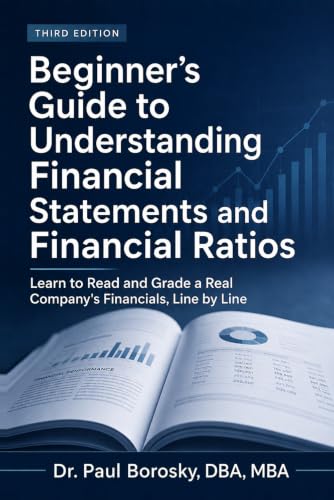
Ready to read your own statements? Beginner's Guide to Understanding Financial Statements, Dr. Paul's best seller.
How to Get Your First Customers
A logo never brought in a customer. People did. Your first 20 customers come from asking, not from ads.
Call the people from Step 1 who said they would pay. Ask them to.
- Go back to the 10 people from Step 1. Three of them said they would pay. Ask them to.
- Ask each customer for one introduction. Neighbors of the yard you just mowed. The next truck in the yard. The office next door.
- Join the chamber of commerce and show up. Face-to-face still wins while AI floods every social feed with the same posts.
- Set up a Google Business Profile with real photos and get your first five reviews from real customers.
- Pick one online channel, not five. Where your customer already is. Post twice a week for six months before you judge it.
- Track where every lead came from. Write it down. In 90 days you will know which channel to double.
The marketing plan in your business plan (Step 2) already says who the customer is and how you reach them. Do that. Skip the rest until it works. For more, see the small business marketing guide.

Ready for customers? Marketing for Small Businesses from the Fabled Forest Business School.
How to Set Up Business Operations (SOPs, Job Descriptions, Systems)
You started the business to get freedom. Here is how you keep it. Write the business down once and it works whether you are in the room or not.
List the five tasks that eat your week.
- List the five tasks that eat your week. Quoting, scheduling, invoicing, ordering, follow-up are the usual suspects.
- Write an SOP for each one. One page. What triggers it, the steps in order, what done looks like, who to ask when it breaks. Record yourself doing it once if writing is slow.
- Group the SOPs into jobs. That is your first job description, written before the hire exists: title, the SOPs they own, hours, pay range, how they are measured.
- Put in simple systems. A shared calendar, an invoicing tool that chases late payers for you, a CRM or even a spreadsheet for every lead and follow-up. Pick cheap tools you will use over good tools you will not.
- Hire when the math says so. Track your hours for two weeks. Hand off the work that pays less than your rate. Hire when the hours you free up produce more than the hire costs. Step 3 projections will tell you when.
- Set up payroll properly. Workers' comp, withholding, a pay schedule. Misclassifying a worker is an expensive mistake.
This is the Organize part of Organize-Plan-Grow. Skip it and Step 10 breaks. Go deeper in the operations guide and the management guide.


Want a business that runs smoothly? Operations for Small Businesses and Management and Leadership for Small Businesses.
Step 10
Grow
Grow it on paper first, then in real life.
How to Grow and Expand a Small Business
Growth is the fun part. A second location, a new service, a bigger team. Plan it on paper first and the growth pays for itself.
Check that the business is steady and the SOPs are in place before you pick a growth move.
Grow on numbers, and grow with confidence:
- Confirm the current business is boring. Steady profit, SOPs in place, a team that handles the day-to-day without you. If it is not boring yet, go back to Step 9.
- Pick one growth move. More of the same customers, a new service for current customers, a new location, or a new customer type. One at a time.
- Rebuild the projections for the move. Step 3 again, with real numbers from the business you already run. Startup cost, time to break even, and what cash looks like in the gap.
- Decide how to fund it. Retained profit, a loan, or a line of credit. Step 5 applies to expansion the same way it applied to the start. Lenders like a second location more than a first one if the numbers are there.
- Set the three-year strategic plan and check it every quarter. Three goals. Three moves. Kill the moves that miss.
- Bring in a fractional CFO when the numbers get bigger than your comfort. Not a full-time hire. A few hours a month to read the statements, test the plan, and tell you the truth.
This is the Grow part of Organize-Plan-Grow. Dr. Paul has guided 1,000+ owners through it, and the ones who grew on paper first are the ones still open.

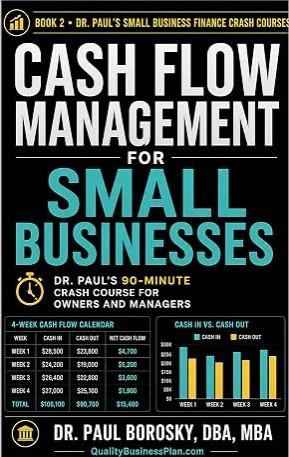
Growing? Run the numbers first with Cash Flow Management for Small Businesses: 90-Minute Crash Course. Then protect your energy with Stressed Out, Burned Out, Tapped Out.
The 60-Second Self-Check
Which Step Are You On?
Four questions. Answer yes or no. Be honest. Every no points to the step you are on.
- Plan
Can I name the one problem I solve and the person who will pay me to fix it?
- Numbers
Could I explain where every number in my projections came from?
- Organize
Is the business registered, licensed, insured, and banked in its own name?
- Run
Could the business run for a week without me?
Where Each No Sends You
Your first no is your next step
Four Yeses
You are ready for Step 10
The business is boring, the numbers are written down, and it runs without you. Now you can grow it on paper first.
FAQ
Questions Owners Ask Before They Start
How much money do I need to start a business?
Do I need a business plan to get a loan?
What is the first step to starting a business?
Can I start a business with no money?
How long does it take to start a business?
What is the easiest business to start?
Need Help With Any Step?
What Do You Need to Start a Business? Start With the Plan
Ten steps. Most owners stall on two of them: the plan and the numbers. Those are the two Dr. Paul has done 1,000+ times, and he can help at any step on this page.
Business consulting starts at $150 an hour. Business plans start at $500. Financial projections and fractional CFO work are quoted per project. One call usually shows which one you need.
Want to learn it yourself first? See all of Dr. Paul's books and business plan templates.
Dr. Paul Borosky, DBA, MBA
Business Consultant, Author & Educator | 14+ Years | 1,000+ Clients Served
Dr. Paul Borosky, DBA, MBA is a business consultant, author, and educator, and the founder of Quality Business Plan. For over 14 years he has helped more than 1,000 owners write plans, build projections, and fund their businesses, with $100M+ in funded projects. He serves small businesses in all 50 states and Canada, most of them between $500K and $5M in revenue. He is the creator of Dr. Paul's Organize-Plan-Grow™ Strategy, author of the Rules for Business and Beginner's Guide series and numerous other books on Amazon, and publisher of over 1,000 business-focused videos on YouTube. He has taught as an adjunct college instructor and teaches in Florida public schools.
This page is for general educational purposes only. It is not legal, financial, tax, accounting, or other professional advice. Rules, fees, and requirements vary by state and change over time. For decisions about your own business, consult a qualified professional.