
Dr. Paul Borosky, DBA, MBA
Business Consultant · Function 1 of 4
What Is the Planning Function of Management?
Most owners have goals. Very few have a plan for reaching them. Business consultant Dr. Paul Borosky, DBA, MBA, breaks planning down into steps you can use this week, shows how a plumbing company plans a second van, and explains how a business plan writer turns planning into a document a lender will fund.
Questions? Call or text (321) 948-9588. Dr. Paul answers personally.
Last Updated: 11/15/2026 · Written by Dr. Paul Borosky, DBA, MBA
The Textbook Answer
Planning, Defined
Doctor Owl in Plain English
Pick the Destination, Then Draw the Map
How the guide works: Doctor Owl is the business consultant in Dr. Paul’s Fabled Forest Business School Series. On this page he explains planning in plain words, then a short forest story shows what skipping it looks like.
Need a Plan That Gets Funded?
How It Works
The Planning Process in Six Steps
Skip a step and the plan falls apart in month two. Work them in order.
- Set one clear goal. Make it specific and dated. “Grow” is not a goal. “Add a second service van by June” is. See how to set short-term business goals.
- Check where you stand today. Cash, people, equipment, customers. You cannot plan a route without knowing your starting point.
- List the options. There is almost never just one road. Buy or lease. Hire or subcontract. Write each one down.
- Pick one and run the numbers. Cost, timing, and what it brings in. If the math does not work on paper, it will not work in real life.
- Break it into actions. Who does what, by when. That is your action plan.
- Set the checkpoints. Decide now how you will know it is working. This is where planning hands off to controlling.
Levels of Planning
Strategic, Tactical, Operational, and Backup Plans
Planning happens at different heights. A small business needs all of them, even if the owner writes every one.
| Type | Time frame | Answers | Go deeper |
|---|---|---|---|
| Strategic | Years | Where is the business going? | One-page strategic plan |
| Tactical | Months to a year | Which projects get us there? | Long-term objectives |
| Operational | Days to weeks | What happens this week? | Operational planning |
| Contingency | As needed | What if it goes wrong? | Scenario planning |
A Real-World Example
A Plumbing Company Plans a Second Van
A two-person plumbing company in Cleveland, Ohio is turning away calls every week. The owner’s gut says buy a second van now.
Instead, he plans. Goal: a second van on the road by June. Starting point: enough cash for a down payment, but no second licensed plumber. Options: hire, or partner with a subcontractor. He runs the numbers on both, picks hiring, and sets three dates: post the job in February, van financing in April, first solo calls in June.
The checkpoint is simple. If the new plumber is not booking a full day by August, the plan gets reviewed. Without the plan, he would have had a second van parked in the driveway and nobody to drive it.
From Dr. Paul’s Fabled Forest
Veronica’s Six Resorts and One Pocket of Coins
Doctor Owl stood at the tailor’s with his wings out, being measured for a new vest, when Visionary Veronica swept through the door with a stack of drawings. Tobin the Toad, waiting his turn in rubber boots, slid his pipe wrench out of her way.
“Six resorts,” she said, fanning them across the counter. “One on the lake, one in the hills, one by the coast. EleWell everywhere.”
Doctor Owl looked at the drawings. They were beautiful. “Which one opens first?”
Veronica waved a trunk. “All of them. Soon.”
“How many coins does the lake resort need?”
She paused. Behind her, Fern from the front desk had already started counting on one wing. Flora was smiling at the tailor.
Doctor Owl took a scrap of chalk from the tailor’s table and drew a single box on the back of the top drawing. “One resort. One date. One number. Then we talk about the second.”
The tailor finished his measurements and wrote them in his book before he touched the cloth. Doctor Owl tapped the book. “Same idea.” In the corner, Tobin pulled out a stub of pencil and copied the box onto the back of his own invoice.
This is one of many stories in Dr. Paul’s Fabled Forest Business School Series. Veronica’s full story is in Book 1.
Dr. Paul’s Insight
Dr. Paul sees the Veronica problem all the time: big vision, no first step. Planning is the middle step of Dr. Paul’s Organize-Plan-Grow™ Strategy for a reason. Get organized first, plan second, and growth has something to stand on.
Watch Out
Where Planning Goes Wrong
“Someday” never shows up on a calendar. Put a date on every goal.
If it is not written down, your team cannot follow it and a lender cannot fund it.
A plan with no cost and no revenue estimate is a wish list.
Some owners plan to avoid starting. Set a deadline for the plan itself.
How a Business Plan Writer Uses Planning
Turning Planning Into a Fundable Business Plan
A business plan is planning, written for someone else to read. When Dr. Paul writes a plan, the planning function shows up in three places: the goals and milestones, the funding request that says exactly what the money buys, and the financial projections that prove the math works. Lenders look for all three.
Sample plan excerpt: Milestones
“The company will hire a second licensed plumber by March, take delivery of a second service van in April, and reach full booking for the second van by August. Loan proceeds fund the van down payment and three months of the new hire’s wages.”
Want that written for your business? See Dr. Paul’s business plan writing packages, or read how to write a strong funding request.
FAQ
Questions About the Planning Function
Why is planning the first function of management?
What is the difference between planning and strategy?
How often should a small business update its plans?
More From the Series
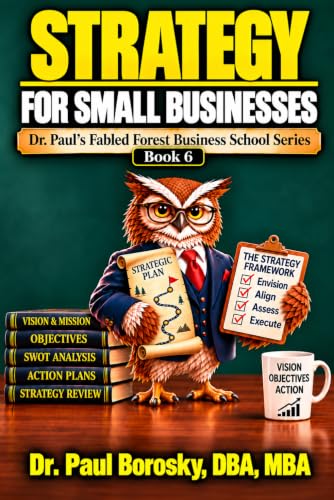
Books for Owners Who Plan Ahead
About Dr. Paul Borosky, DBA, MBA
Dr. Paul is a business consultant and author with 14+ years of experience and 1,000+ written business plans. He helps owner-run small businesses build plans, financial projections, and systems that work without the owner doing everything. Read more about Dr. Paul or see all of his books on Amazon.
This page is for general educational purposes only. It is not legal, financial, or other professional advice. For decisions about your own business, consult a qualified professional.