
Dr. Paul Borosky, DBA, MBA
Business Consultant · Management Glossary
What Is Employee Buy-In and How Do You Get It?
Why do good changes fail at so many small businesses? Usually because the people doing the work were never asked. Business consultant Dr. Paul Borosky, DBA, MBA, breaks down what employee buy-in means, why it beats announcements and memos, and how to bring a team into a change before the launch date, not after the complaints start.
Questions? Call or text (321) 948-9588. Dr. Paul answers personally.
Last Updated: 11/07/2026 · Written by Dr. Paul Borosky, DBA, MBA
The Short Answer
What Is Employee Buy-In?
How to get it, in short: explain the problem the change fixes, ask the people who do the work how it should run, let a small group pilot it, review the results together, and roll it out with their adjustments. The five steps below walk through each one.
Rolled Out a Change Nobody Uses?
In Plain English
Agreeing It Is Worth Doing
Buy-in means your team gets why the change matters and agrees it is worth doing.
Without it, people nod in the meeting and go back to the old way the next morning. You do not get a fight. You get quiet workarounds.
A Real-World Example
The Restaurant That Kept Writing Tickets by Hand
A restaurant in Orlando, Florida buys a new point-of-sale system. Nobody asked the servers about it. At the dinner rush they find it slow, so they keep writing tickets by hand.
The owner tries again. Two servers test the system for a week, suggest a faster button layout for the most-ordered items, and then help train everyone else. Within a month, the handwritten tickets are gone.
From Dr. Paul’s Fabled Forest
Dumpster Dani and the Route Board
Doctor Owl was waiting at the cobbler’s counter when Dumpster Dani stormed in, still wearing her work gloves.
“I hung a brand-new route board,” she said. “Color-coded. Beautiful. And my drivers drive right past it like it isn’t there. Load it up, it’s as good as there!”
Doctor Owl turned his teacup slowly. “Who drew the routes?”
“I did,” Dani said. “Alone. At midnight.”
The next week, Dani asked her oldest driver to test the board for five days. He moved two stops that always ran late. When the board went back up, every driver used it, because a friend had helped build it.
This story is one of dozens told across Dr. Paul’s Fabled Forest Business School Series. You just read one from Book 1.
Dr. Paul’s Insight
Dr. Paul’s rule of thumb: people support what they help build. Ask before you announce.
Put It to Work
How to Get Buy-In for a Change in Five Steps
- Explain why. Name the problem the change fixes in one or two sentences. People accept change more easily when they know the reason.
- Ask how. Get input from the people who do the work before you decide the details.
- Pilot it. Let one person or one shift try it for a set time, like a week.
- Review together. What worked, what did not, and what should change before rollout.
- Roll it out and give credit. Launch with the adjustments, and name the people who shaped it.
Watch Out
Pitfalls When Building Buy-In
A memo tells people what changed. It rarely makes them want it.
Problems you could have caught with two people now hit the whole team.
Without the reason, the change looks like more work for nothing.
If speaking up gets you in trouble, people stop speaking up and start working around you.
Why It Matters
Benefits of Real Employee Buy-In
- Changes are more likely to stick
- Better ideas from the people closest to the work
- Less quiet resistance
- Smoother rollouts
In Your Business Plan
How Employee Buy-In Shows Up in a Business Plan
When a plan includes a new system or process, lenders want to know it will actually get used. A short pilot and rollout schedule shows that.
Sample plan excerpt: Operating Plan, Implementation
“The new scheduling system will be piloted by two servers for two weeks in March. Their feedback will be reviewed with the full staff before rollout in April. Training is scheduled for slower weekday afternoons.”
FAQ
Questions Owners Ask About Employee Buy-In
Why do employees resist change?
How do you get buy-in from staff?
What is the difference between buy-in and compliance?
More From the Series
Keep Building Your Business
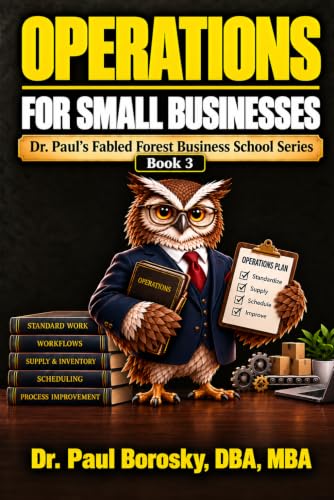
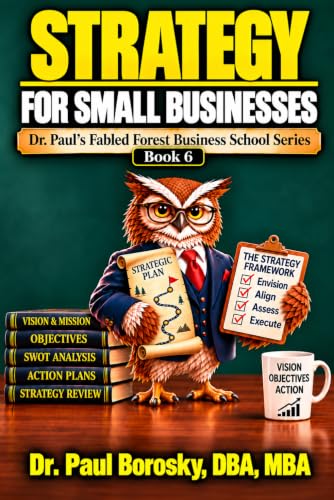
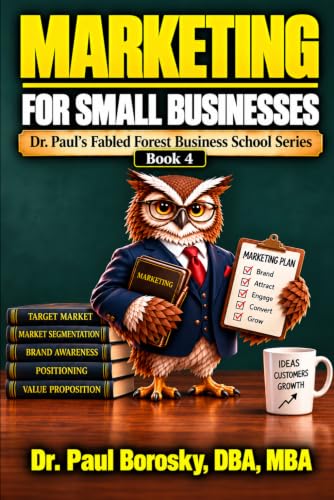
Every book in Dr. Paul’s Fabled Forest Business School Series teaches one subject through short stories, real terms, and one-page worksheets.
Dr. Paul Borosky, DBA, MBA
Dr. Paul is a business consultant and author with 14+ years of experience and 1,000+ written business plans. He works with owner-run small businesses on plans, financial projections, and the systems that let a business run without the owner doing everything. This page is part of the glossary for Management and Leadership for Small Businesses, Book 1 of Dr. Paul’s Fabled Forest Business School Series.
This page is for general educational purposes only. It is not legal, HR, or other professional advice. For decisions about your own business, consult a qualified professional.