
Dr. Paul Borosky, DBA, MBA
Business Plan Writer · Business Consultant
Why Don’t Restaurant Customers Come Back After a Good Meal? Delicious Sells. Tender Returns.
The food was great. The review says so. And the customer never comes back. The reason is hiding in the words customers use.
Written by Dr. Paul Borosky, DBA, MBA
The Definition
Why Don’t Customers Return to a Restaurant?
Customers often fail to return after a positive first visit because what drives a recommendation differs from what drives a repeat visit. Review research shows general praise such as “delicious” or “amazing” is associated with recommendations, while specific sensory descriptions of texture and flavor, attentive service, generous portions, and perceived value are associated with return visits.
“A pretty plate and a good story get people to tell their friends. But to come back on their own, they need to remember how the food felt in their mouth, and feel they got more than they paid for. The first visit is for the photo. The second is for the bite.”
Need the answer fast? Read the gold Short Answer boxes and the numbered steps. Want the full picture? Follow Sunny the sea otter, the most charming vendor on the kelp coast, from Dr. Paul’s Fabled Forest, as his shiny new snack cart wins rave reviews and almost no return customers. The story shows up in a few short gold notes along the way. The study numbers sit in one section, clearly marked.
Get Your Restaurant Plan Written, or Build It Yourself
Lenders want covers, prime cost, and break even before they read the menu. Pick how you want to get there.
Business Consulting
Packed dining room and a thin bank balance? Dr. Paul helps restaurant owners sort out prime cost, cash, staffing, and menu pricing.
See consulting options →Business Plan Writing
FeaturedCovers by shift, prime cost, and break even, built into one plan your lender and landlord can follow. Dr. Paul writes it with you.
Start your plan →Restaurant Business Plan Template
A Word plan and an Excel model built around covers, check size, and food cost, with video tutorials for both.
See the template →Small Business Education
Free guides on funding, financial statements, and running the business, plus Dr. Paul’s plan-writing videos.
Start learning →From Dr. Paul’s Fabled Forest
Meet Sunny: The Prettiest Snack on the Coast
Some lessons stick better as a story. Dr. Paul’s Fabled Forest is his business school told through a forest full of small business owners. Doctor Owl, a dry-witted consultant who lives in the Lone Oak, helps them fix the same problems real owners face. Today he travels to the kelp coast, where Sunny the sea otter, the most charming vendor on the shore, has opened a snack cart selling glossy, golden kelp crisps.
SUNNY: (floating on his back, grinning) Doctor Owl! Have you seen the notes about my crisps? “Amazing!” “Gorgeous!” “Best-looking snack on the coast!”
DOCTOR OWL: Very nice. How many of those customers came back?
SUNNY: Came back? Well. They told their friends. The friends came once.
DOCTOR OWL: Does anyone ever write about how the crisps taste?
Sunny thinks. He reads the notes again. Pretty. Shiny. Golden. Not one says crunchy.
SUNNY: (sinking a little lower in the water) They’re a little soft by the afternoon. I make them all in the morning.
DOCTOR OWL: And you raised the price after the first busy week?
SUNNY: Folks were lining up! It felt fair.
DOCTOR OWL: So the second visit costs more, and tastes less. That is a lot to ask of a friend.
An original Fabled Forest moment. Similar stories about Doctor Owl and the forest’s owners are in Sales for Small Businesses, Book 5 of Dr. Paul’s Fabled Forest Business School.
Sunny has a decision to make. Keep reading. You’ll see what he does, and why it works for your restaurant too.
 Similar stories in Sales for Small Businesses
Dr. Paul’s Fabled Forest Business School, Book 5 See the Books →
The Gap
Why a Great Review Does Not Mean a Second Visit
Dr. Paul’s study of 752 customer reviews across 12 restaurants in 12 states found that the words customers use predict what they do next. General praise, “amazing,” “delicious,” shows up with recommendations. Specific sensations, how the food felt, show up with return visits.
“Amazing,” “delicious,” “excellent.” The customer tells a friend. The friend comes once.
“Tender,” “crispy,” “juicy,” “smoky.” The customer remembers the bite, and comes back for it.
Sunny’s reviews said “gorgeous.” Not one said “crunchy.” His crisps looked better than they tasted by the afternoon.
Show the Numbers
What Do Reviews Say About Coming Back?
| Finding | What the reviews showed |
|---|---|
| Food praise | 454 of 752 praised the food. Any food praise carried recommendations: 15.6%, against 7.4% for reviews with none. |
| Sensation words | 156 described a physical sensation. Those carried return visits: 14.7%, against 9.2%. |
| Price | 25 called the restaurant expensive. They still recommended it, at 16.0%. Not one of the 25 wrote a word about coming back. |
Customers who call you expensive will still send their friends. They just will not come back themselves. Raise what they get, not just what they pay.
The Fix
How Do You Get Customers to Come Back After the First Visit?
- 1
Fix the dull dish first
The plate that is “fine” costs more return visits than the one that is great.
- 2
Chase texture
Crisp stays crisp. Tender stays tender. Time your pass so food reaches the table the way it left the kitchen.
Sunny’s FixSunny started frying crisps in small batches all day instead of one big batch every morning.
- 3
Check temperature at the table
Freshness is judged in the last few minutes before the plate lands.
- 4
Weigh your plates
Customers who leave satisfied come back. Offer a half size if portions run large.
- 5
Raise what they got, not just what they paid
If prices go up, make the plate feel worth it.
From Dr. Paul’s Work as a Business Consultant
What a Business Consultant Tastes For
When a restaurant has strong reviews and weak repeat business, Dr. Paul looks past the star rating to the words. Do customers describe the food, or just praise it?
Owners usually want to fix marketing. The fix is often in the kitchen: a dish that looks great and tastes tired by the time it lands.
Your first-time customers are judging the photo. Your regulars are judging the bite. Build the menu for the second visit.
From Dr. Paul’s Fabled Forest
What Sunny Did Next
A month later, Sunny’s cart had a little bell. It rang every time a fresh batch came out of the fryer.
SUNNY: (handing Doctor Owl a warm crisp) Small batches all day. And I put the price back down, but the scoop is bigger now.
DOCTOR OWL: It crunches.
SUNNY: (pointing) That’s what the notes say now. “Crunchy.” “Still warm.” And look.
A walrus at the front of the line has been there three times this week.
SUNNY: Turns out shiny gets them here once. Crunchy brings them back.
The lesson for your restaurant: Great reviews get customers in the door once. Food they remember for how it tastes, and value they can feel, bring them back.
In Your Business Plan
How Does This Go in Your Business Plan?
Lenders read your menu and marketing sections for one question: will customers come back? Answer it. Related guides: How Should a Restaurant Handle the Wait? and How Do You Train Restaurant Staff on the Menu?.
- 1
Describe your signature dishes by how they taste
Not just what they are.
- 2
Show your quality controls
Batch sizes, timing at the pass, plate checks.
- 3
Show your value strategy
Portions and pricing that feel fair on the second visit.
- 4
Show your return plan
How you will measure and grow repeat visits.
This is one piece of the full plan. See How to Write a Restaurant Business Plan for every section, start to finish.
Great reviews but slow repeat business?Dr. Paul works with restaurant owners to find what keeps customers coming back.
Questions
Restaurant Return Visit Questions
Why don’t customers come back to a restaurant?
Often the food was good enough to praise but not memorable enough to crave, the price felt high for a second visit, or nobody noticed them the first time.
Do expensive restaurants lose repeat customers?
In Dr. Paul’s study of 752 customer reviews across 12 restaurants in 12 states, customers who called a restaurant expensive still recommended it, but none mentioned coming back. Price affects the second visit more than the referral.
How can a restaurant increase return visits?
Fix dull dishes, protect texture and temperature, give generous portions or a half-size option, and make sure the value matches the price.
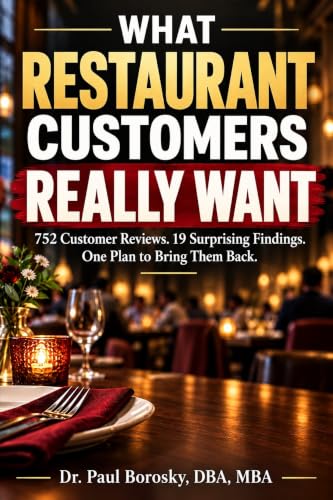
What Restaurant Customers Really Want
What gets customers to recommend you, what brings them back, and the fixes for both.