
Dr. Paul Borosky, DBA, MBA
Business Plan Writer · Business Consultant
Should a Restaurant Lease or Buy Equipment? The Lowest Payment Is the Bait
Sooner or later every restaurant needs something big. Most owners decide by the monthly payment. That is how they end up paying the most.
Written by Dr. Paul Borosky, DBA, MBA
The Definition
What Does It Mean to Lease or Buy Restaurant Equipment?
Buying restaurant equipment means acquiring ownership, either with cash or through equipment financing repaid with interest. Leasing means paying to use the equipment for a set term without owning it at the end. The right choice is the option with the lowest total cost of ownership the business can afford, not the lowest monthly payment.
Total cost of ownership = money up front + all payments − what the equipment is worth at the end
“Do not ask what it costs a month. Ask what it costs in total, and what you own when the payments stop. A small payment for a long time is still a big number.”
Need the answer fast? Read the gold Short Answer boxes and the numbered steps. Want the full picture? Follow Fast Frankie the fox, owner of Fast Frankie’s Fire-Baked Pizza, from Dr. Paul’s Fabled Forest, as a smooth salesman offers him the lowest payment in the forest. The story shows up in a few short gold notes along the way. The math sits in one section, clearly marked.
Get Your Restaurant Plan Written, or Build It Yourself
Lenders want covers, prime cost, and break even before they read the menu. Pick how you want to get there.
Business Consulting
Packed dining room and a thin bank balance? Dr. Paul helps restaurant owners sort out prime cost, cash, staffing, and menu pricing.
See consulting options →Business Plan Writing
FeaturedCovers by shift, prime cost, and break even, built into one plan your lender and landlord can follow. Dr. Paul writes it with you.
Start your plan →Restaurant Business Plan Template
A Word plan and an Excel model built around covers, check size, and food cost, with video tutorials for both.
See the template →Small Business Education
Free guides on funding, financial statements, and running the business, plus Dr. Paul’s plan-writing videos.
Start learning →From Dr. Paul’s Fabled Forest
Meet Frankie: The Lowest Payment in the Forest
Some lessons stick better as a story. Dr. Paul’s Fabled Forest is his business school told through a forest full of small business owners. Doctor Owl, a dry-witted consultant who lives in the Lone Oak, helps them fix the same problems real owners face. Today he finds Fast Frankie the fox, owner of Fast Frankie’s Fire-Baked Pizza and a small fleet of food trucks, standing in a lot full of delivery wagons with a very friendly salesman.
FRANKIE: (already halfway into the driver’s seat) Doctor Owl! Perfect timing. I need a third wagon for the catering orders. This one is perfect.
DOCTOR OWL: Buy it, finance it, or lease it?
FRANKIE: Lease! Lowest payment in the forest. He said so himself.
DOCTOR OWL: And at the end of the lease, who owns the wagon?
FRANKIE: Him, I guess. But the payment is tiny.
DOCTOR OWL: Add up every tiny payment. Then subtract what you will own at the end. Which is nothing.
Frankie climbs back out of the wagon. Slowly, for Frankie.
DOCTOR OWL: The low payment is not the deal, Frankie. It is the bait.
An original Fabled Forest moment. Similar stories about Doctor Owl and the forest’s owners are in Operations for Small Businesses, Book 3 of Dr. Paul’s Fabled Forest Business School.
Frankie has a decision to make. Keep reading. You’ll see what he does, and why it works for your restaurant too.
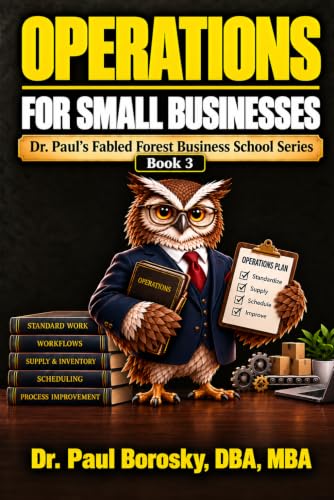 Similar stories in Operations for Small Businesses
Dr. Paul’s Fabled Forest Business School, Book 3 See the Books →
First Question
Should You Borrow for It at All?
Before you pick cash, a loan, or a lease, answer a simpler question: will this purchase pay you back?
- 1
It earns more than the money costs
If a catering van and the business it carries earn far more each year than the loan costs, borrowing makes money. If it earns less than the loan costs, borrowing loses money every year.
- 2
The restaurant can make the payment in a bad month
A great return does not help if the payment comes due in February and the cash is not there.
- 3
There is real demand behind it
A signed catering contract is demand. A hunch is not.
Frankie had a real reason to buy: catering orders he could not fill. He just had the wrong reason to pick the lease.
Show the Math
What Is the Total Cost of Leasing vs. Buying?
Here is a refrigerated van that sells for $28,000 and will be worth about $10,000 after four years. Illustration numbers only.
| Option | Up front | Payments | Worth at the end | Total cost |
|---|---|---|---|---|
| Pay cash | $28,000 | $0 | ($10,000) | $18,000 |
| Finance: $5,000 down, $23,000 at 9% for 4 years | $5,000 | $27,500 | ($10,000) | $22,500 |
| Lease: $2,500 at signing, $499 a month for 4 years | $2,500 | $24,000 | $0 | $26,500 |
The lease has the lowest monthly payment and the highest total cost. At the end, you hand back the keys and own nothing. Many leases also come with mileage limits and wear charges.
Financing costs more than paying cash. That extra is the price of keeping cash in the bank. For a restaurant with a thin cushion, it is often worth paying.
When Leasing Makes Sense
When Should a Restaurant Lease Equipment?
Leasing is not always wrong. It fits a few situations.
- 1
You need the newest version every few years
POS terminals and some technology go out of date fast.
- 2
The lease includes service you would pay for anyway
Dish machines and ice machines are often leased with maintenance included.
- 3
The equipment loses value fast
If it is worth almost nothing at the end, owning it matters less.
- 4
You are protecting cash in year one
Sometimes paying more over time is worth keeping cash for the slow first months. Know the total either way.
Before the Next Emergency
How Do You Plan for Equipment Breakdowns?
The worst time to shop for financing is Saturday night with a dead walk-in.
- 1
Open a line of credit before you need it
Banks lend most easily when you do not need the money.
- 2
Keep a cash reserve
A reserve turns a breakdown into a bad week instead of a crisis. See how much cash to keep.
- 3
Know your options in advance
Get a financing quote for your most important equipment now, so you are not choosing under pressure.
Frankie’s FixFrankie opened a line of credit at the First Bank the same week, while the ovens were all running fine.
From Dr. Paul’s Work as a Business Plan Writer
How a Business Plan Writer Handles Equipment
In a business plan, equipment shows up three ways: the purchase in the startup budget, the payment in the projections, and the value wearing down over time.
When Dr. Paul builds a restaurant plan, the equipment list and the financing choice have to match. A lender who sees a lease on the budget and a loan in the projections stops trusting the rest of the numbers.
Borrow for things that pay you back. Then pick the cheapest way to pay for them, not the lowest payment.
From Dr. Paul’s Fabled Forest
What Frankie Did Next
Frankie came back to the Lone Oak a week later with three columns scratched on a pizza box lid: cash, finance, lease.
FRANKIE: The lease costs the most. By a lot. And I own nothing at the end.
DOCTOR OWL: And cash?
FRANKIE: Cheapest. But it empties the till right before the slow season.
DOCTOR OWL: So?
FRANKIE: So I finance it. A little down, a fair rate, and the wagon is mine. And I opened a line of credit, for the next time an oven dies on a Saturday.
The lesson for your restaurant: Judge every equipment deal by its total cost and what you own at the end. Then plan for the next breakdown before it happens.
In Your Business Plan
How Does Equipment Go in Your Business Plan?
Lenders look for three things when equipment shows up in a restaurant plan. Related guides: Why Is My Restaurant Busy but Out of Cash?.
- 1
A real equipment list
Item, new or used, quote, and source. Not a single round number.
- 2
The financing choice and its cost
Cash, loan, or lease, with the monthly payment in your projections.
- 3
Proof it pays you back
For expansion equipment like a catering van, show the revenue it supports.
- 4
A plan for breakdowns
A reserve, a line of credit, or both.
This is one piece of the full plan. See How to Write a Restaurant Business Plan for every section, start to finish.
Want your equipment and financing built into one plan?Dr. Paul writes the plan, the startup budget, and the projections so the numbers match.
Questions
Restaurant Equipment Questions
Is it better to lease or buy restaurant equipment?
Compare the total cost of ownership: money up front, plus all payments, minus what the equipment is worth at the end. Buying or financing usually costs less for long-lasting equipment. Leasing can fit technology or equipment that includes service.
Should I buy used restaurant equipment?
Used stainless tables, shelving, and ranges are often a smart buy. Buy refrigeration new or have it inspected, because a failure can cost you a weekend of food.
How do I pay for an emergency equipment repair?
Plan before it happens. Keep a cash reserve and open a line of credit while business is steady, so a breakdown does not drain the operating account.
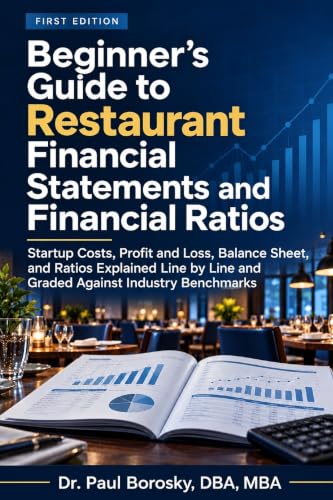
Beginner’s Guide to Restaurant Financial Statements and Financial Ratios
When to borrow, how to compare cash, loans, and leases, and how much cash to keep for the next breakdown.