Sales · Glossary
Small Business Sales Glossary: Sales Terms in Plain English
Qualifying. Discovery. The honest close. Most sales words describe something you already do, or should be doing. This sales glossary defines 96 terms from the book in plain English, each one linked to the foundation that puts it to work.
Last Updated: 11/02/2026 · Written by Dr. Paul Borosky, DBA, MBA
Prefer to Watch? Start Here
A short tip from Dr. Paul on putting daily sales into a business plan, so the sales you are chasing become a number you can track day by day.
Business Plan Writer's Tip #68 for Anchorage, AK.: Daily Sales in a Business Plan
Dr. Paul Borosky, DBA, MBA. (4:10)
The Terms
Sales Terms Every Owner and Student Should Know
Each term below is taught by name in Sales for Small Businesses, Book 5 of Dr. Paul's Fabled Forest Business School Series. The tag under each definition shows the chapter that teaches it. Click it to see the full foundation, or start with the small business sales guide.
Story words from the forest are left off this list: coins (the forest's money), fire or foundation (Doctor Owl's first question), and the Talon Way (the tempting shortcut in several chapters). In the book they carry the story. Here, money is just money.
- After-Sales Service
- Everything you do for a buyer once they have paid: checking how it went, putting right anything that broke, and keeping track of who returns.
- Chapter 17: After-Sales Service →
- Answer It True
- Responding to a customer's worry with the honest answer, even when the honest answer is that you are not the right fit for them.
- Chapter 13: Objection Handling →
- Answer the Question They Asked
- Replying to what the customer actually wanted to know, usually whether you can fix it, how soon, and the price, in the order they asked.
- Chapter 4: Solution Selling →
- Anyone Trained Can Run It
- A sale built so more than one person can handle every step, because the instructions for each step are written down where people can find them.
- Chapter 20: Sales Process →
- Ask
- The first of the four sales jobs in the book: stating your price, asking for the sale out loud, and then waiting quietly for the reply.
- Introduction: Small Business Sales Guide →
- Ask Again
- After a worry has been settled, returning to the request for the order instead of leaving the conversation hanging.
- Chapter 13: Objection Handling →
- Asking for the Order
- Plainly inviting the customer to buy at the end of the conversation, with a simple question about whether they would like to go ahead.
- Chapter 9: Asking for the Order →
- The Booking Board Says Yes First
- Before promising a date, an amount, or a delivery, check your real capacity in rooms, vehicles, hours, or stock. If the board says no, so do you.
- Chapter 16: Overselling →
- The Came-Back Count
- A running tally of how many first-time buyers returned for a second purchase. It shows whether your work after the sale is keeping customers.
- Chapter 17: After-Sales Service →
- Can They Buy?
- A qualifying check on whether the prospect has both the money and the authority to say yes.
- Chapter 6: Qualifying →
- Can We Deliver?
- A qualifying check on whether you have the hours, people, and equipment to do the job on the date you would promise.
- Chapter 6: Qualifying →
- Check It
- The step in handling an objection where you ask the customer whether your answer really settled their concern.
- Chapter 13: Objection Handling →
- Close
- The third sales job in the book: the written quote, honest answers to worries, a clear yes or no, and the agreement both sides sign.
- Introduction: Small Business Sales Guide →
- The Closing Question
- The short, direct question that invites the customer to buy.
- Chapter 9: Asking for the Order →
- Closing Techniques
- The methods a seller uses to help a customer move from undecided to yes. Some respect the buyer, and some lean on pressure.
- Chapter 10: Closing Techniques →
- Consultative Selling
- Selling like a trusted adviser: learn what the customer has and what they need, then recommend the option that truly suits them.
- Chapter 7: Consultative Selling →
- Cross-Selling
- Offering an extra item that pairs with what the customer is already buying, like a case with a new phone.
- Chapter 18: Upselling and Cross-Selling →
- The Customer Who Already Trusts You
- Your existing customer, who is the most likely to accept a fitting offer, yet is often the person owners feel most awkward offering anything to.
- Chapter 18: Upselling and Cross-Selling →
- Deposits
- Money paid at signing that shows both sides are committed and covers part of the seller's cost if the buyer backs out. A good agreement says who holds it, when it is returned, and how it applies to the final bill.
- Chapter 15: The Sales Agreement →
- “Did It Arrive Whole?”
- A deliberate check, made in writing through a note in the package, on the receipt, or in a later message, that the order reached the customer in good shape.
- Chapter 17: After-Sales Service →
- Discovery
- The stage of a sale where you learn what the customer needs before you talk about what you sell.
- Chapter 3: Discovery →
- Explain the Price
- Walking a customer through what goes into your number, such as your costs, the quality, delivery, and the result they get, so the price makes sense.
- Chapter 14: Price Objections →
- Feast and Famine
- Swinging between a packed month and an empty one with no early warning. It is common when sales are tracked in the owner's head instead of on paper.
- Chapter 11: Sales Pipeline →
- Finding Out What They Came For
- The purpose of discovery. The real reason a customer shows up is often not the first thing they ask about.
- Chapter 3: Discovery →
- Fixing the Bad Ones
- When a customer says something went wrong, you answer quickly, name the person who will fix it, and give a real date, without debating who was to blame.
- Chapter 17: After-Sales Service →
- The Follow-Up Column
- A spot next to each quote where you record the day you will check back, filled in before the quote goes out.
- Chapter 12: Sales Follow-Up →
- The Gift versus the Sale
- The line between giving something away by choice and giving it away because asking for payment felt too hard.
- Chapter 2: Value Exchange →
- Hear It
- Repeating the customer's worry back so they know you listened, and asking a question when the real concern behind it is unclear.
- Chapter 13: Objection Handling →
- Hire
- Picking someone who is a good fit for the work of selling on your behalf.
- Chapter 19: Sales Management →
- Hold the Number
- Keeping the price you set, calmly, without apologizing for it.
- Chapter 14: Price Objections →
- The Honest Close
- A three-step close: repeat back what the customer said they wanted, give them two options, and ask which one they prefer.
- Chapter 10: Closing Techniques →
- How Long the Offer Stands
- The expiration date on a quote, after which the price may change.
- Chapter 5: The Sales Quote →
- In Writing
- An agreement both parties have signed, so either side can check the terms later instead of trusting memory.
- Chapter 15: The Sales Agreement →
- Is It Ours?
- A qualifying check on whether the job is something you do, in an area you cover, at a price you are willing to defend.
- Chapter 6: Qualifying →
- Keep
- The fourth sales job in the book: managing the pipeline, following up, caring for customers after the sale, and training people to do it all without you.
- Introduction: Small Business Sales Guide →
- Know Your Floor
- Before you name any price, know the lowest number you can accept: your true cost plus the amount you need to keep.
- Chapter 8: Negotiation →
- Letting Them Say No
- Accepting a clear no as a real answer. It is useful, because it tells you exactly where you stand.
- Chapter 9: Asking for the Order →
- Listen
- The second sales job in the book: learning why the customer came before you describe what you offer.
- Introduction: Small Business Sales Guide →
- Needs Before Pitch
- The rule of asking questions first and making your offer second.
- Chapter 3: Discovery →
- Negotiation
- A back-and-forth trade between two parties that continues until both can agree.
- Chapter 8: Negotiation →
- Not Proceeding
- The last column on a pipeline board, where lost sales go along with a note on why they did not happen.
- Chapter 11: Sales Pipeline →
- The Number That Matters
- The measure that shows a sale held up, like a booking that was kept, rather than just a deal that was signed.
- Chapter 19: Sales Management →
- Objection Handling
- The way you respond when a customer raises a concern before making up their mind.
- Chapter 13: Objection Handling →
- Offering What Fits
- Suggesting only the extras that suit this specific customer, based on what you have learned about them.
- Chapter 18: Upselling and Cross-Selling →
- “On the House” on Purpose
- Giving something free by choice, tracking what it is worth, and aiming it where it does the business some good.
- Chapter 2: Value Exchange →
- The One Line on the Order Sheet
- One short add-on question, easy to decline, that you ask with every order.
- Chapter 18: Upselling and Cross-Selling →
- One Name Owns Each Customer
- Whoever takes an inquiry is responsible for its next step until that step is finished.
- Chapter 20: Sales Process →
- Open Questions
- Questions that need more than a yes or no, which get customers talking about what they really want.
- Chapter 3: Discovery →
- Outcome Before Mechanism
- Leading with the result the customer will get, then explaining how you do it.
- Chapter 4: Solution Selling →
- Overselling
- Promising more than your business can actually deliver in order to close a sale.
- Chapter 16: Overselling →
- The Owner as Bottleneck
- The slowdown that happens when every step of a sale has to pass through the owner.
- Chapter 20: Sales Process →
- Pay for That Number
- Tying pay to the number that matters, since people usually do whatever the pay plan rewards.
- Chapter 19: Sales Management →
- The Polite No with a Referral
- Turning down a customer who is a poor fit and sending them to someone better suited to help.
- Chapter 6: Qualifying →
- The Pressure Close
- Pushing for a yes with a fake clock, an invented deadline, or a bit of shame. A genuine deadline, mentioned once, is just useful information.
- Chapter 10: Closing Techniques →
- The Price as Information
- Seeing your price as a fact the customer needs to make a decision, not as a demand you are making of them.
- Chapter 1: Sales Mindset →
- Price Objection
- A customer pushing back on the number, such as saying it seems high or that they can find it cheaper.
- Chapter 14: Price Objections →
- Promising What Delivery Cannot Keep
- The part of overselling that happens while talking with a customer, usually in a friendly way and with no intent to deceive.
- Chapter 16: Overselling →
- Qualifying
- Figuring out early, before you invest time in selling, whether a prospect is a real buyer for what you actually sell.
- Chapter 6: Qualifying →
- A Question Is Not a No
- Most customer worries are really a request for one more piece of information, not a rejection.
- Chapter 13: Objection Handling →
- The Quote Is the Promise
- Customers expect exactly what the quote says on delivery day, so any later additions belong on the quote too, with a price beside them.
- Chapter 16: Overselling →
- Recommend What You Would Buy
- Suggest the option you would pick yourself if it were your own money being spent.
- Chapter 7: Consultative Selling →
- The Sale Is Not Over at the Counter
- To the customer, the sale ends only when the item arrives and does its job, not when they pay.
- Chapter 17: After-Sales Service →
- Sales Agreement
- A written record of the deal a seller and a buyer have settled on.
- Chapter 15: The Sales Agreement →
- Sales Follow-Up
- Reaching out again to a customer who has gone quiet, on a day you planned, with a real reason to get in touch.
- Chapter 12: Sales Follow-Up →
- Sales Management
- Making sure the people who sell for you do it the way you would.
- Chapter 19: Sales Management →
- Sales Mindset
- The way you think about the moment you ask someone to buy, which shapes whether asking feels like helping or like begging.
- Chapter 1: Sales Mindset →
- Sales Pipeline
- A written list of every possible sale, sorted by how far along it is and reviewed on a set day.
- Chapter 11: Sales Pipeline →
- Sales Process
- The steps of a sale, written in order, so anyone you train can follow them the same way.
- Chapter 20: Sales Process →
- Sales Quote
- A written answer to the two things every customer wants to know: what they will receive and what it will cost.
- Chapter 5: The Sales Quote →
- Scope, Time, and Price
- The three levers in a negotiation: what is included, when it gets done, and how much it costs.
- Chapter 8: Negotiation →
- The Second Contact with a Date and a Reason
- A brief follow-up note that gives the customer a reason to act now, like a price that expires soon, an open day, or a season that is closing.
- Chapter 12: Sales Follow-Up →
- Selling
- Helping a customer figure out whether what you offer is right for them, then asking them to buy.
- Introduction: Small Business Sales Guide →
- Selling as Advice
- Treating the sale like advice to a friend: learn their situation and needs, then point them to what fits.
- Chapter 7: Consultative Selling →
- Selling as Helping
- Seeing the sale as helping someone decide if your product is right for them, then asking for a clear yes or no.
- Chapter 1: Sales Mindset →
- Selling Is Not Begging
- Begging asks for a favor. Selling simply tells a customer the price of something they came looking for.
- Chapter 1: Sales Mindset →
- The Silence After It
- The quiet moment after you ask for the order. Many sellers fear it, but it is the customer's turn to talk, and it does the work.
- Chapter 9: Asking for the Order →
- Silence Does Not Tell You Enough
- No reply could mean the customer is busy, still deciding, not interested, or bought somewhere else. You only find out by asking.
- Chapter 12: Sales Follow-Up →
- The Sleep-on-It Test
- A quick way to tell a fair close from a pushy one: picture the customer taking a night to think it over. Would the yes still hold the next morning?
- Chapter 10: Closing Techniques →
- Solution Selling
- Selling the result your product or service delivers for the customer, in their own words, instead of the details of how it works.
- Chapter 4: Solution Selling →
- Stages
- The steps a sale passes through on its way to finished. The book uses five: asked, quoted, deciding, booked, done.
- Chapter 11: Sales Pipeline →
- The Steps Written Down in Order
- Your whole sale as a checklist anyone can follow, from answering the first call to quoting, asking for the order, following up, putting it in writing, confirming delivery, and making one more offer.
- Chapter 20: Sales Process →
- “That's a Lot” Is a Question
- When a customer says the price is high, they are usually asking what they get for it or why it costs that much.
- Chapter 14: Price Objections →
- Trade Something Else Instead
- When a customer wants to pay less, offer a smaller or simpler option instead of selling the same thing at a loss.
- Chapter 14: Price Objections →
- Trading, Not Conceding
- Whenever you give something up in a negotiation, ask for something in return.
- Chapter 8: Negotiation →
- Train
- Teaching someone, step by step, how your business sells: what you offer, who it serves, and which questions to ask.
- Chapter 19: Sales Management →
- Trust as the Product
- Over time, what customers really buy from you is your honesty. The service you deliver is the evidence of it.
- Chapter 7: Consultative Selling →
- Upselling
- Offering a customer a bigger, better, or longer version of what they already plan to buy.
- Chapter 18: Upselling and Cross-Selling →
- Value Exchange
- A trade both sides choose freely: the customer values what you offer more than the money, and you value the money more than what you hand over.
- Chapter 2: Value Exchange →
- The Weekly Look
- A short, regular meeting each week to review the pipeline or the key number and agree on the next step and deadline for every name.
- Chapter 11: Sales Pipeline →
- What Both Sides Agreed
- The specifics of the deal spelled out: the parties, the items and quantity, timing, price, and whether this is a firm purchase or a trial.
- Chapter 15: The Sales Agreement →
- What Happens If Someone Cancels
- The final clause of an agreement, and the one you will be most glad you wrote on the day a cancellation happens.
- Chapter 15: The Sales Agreement →
- What Is Not Included
- The things a customer might assume come with the job but do not, written on the quote so no one is caught off guard.
- Chapter 5: The Sales Quote →
- What It Does for Them
- The benefit the customer gets. If they cannot say it back to you, your explanation needs more work.
- Chapter 4: Solution Selling →
- Will They Buy?
- A qualifying check on whether the prospect has a real reason to buy and a date they need it by.
- Chapter 6: Qualifying →
Knowing the word does not make the sale. Asking does.
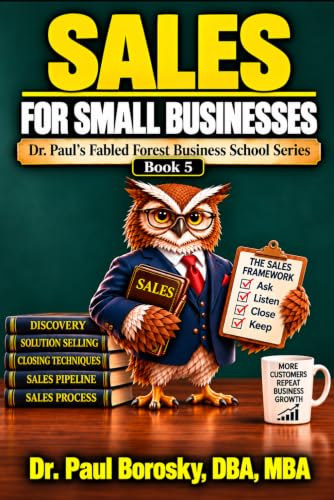
Every term here shows up in the book inside a real problem: a squirrel who could not say her price out loud, a quote that went out with no second note behind it, a promise the schedule could not keep. 20 foundations, a Nutshell for each, and the Owner's Scorecard. Book 5 of Dr. Paul's Fabled Forest Business School Series.
Put the Terms to Work
Start With the Foundation You Need
A definition helps you follow the conversation. A foundation helps you win the sale. These are the ones owners ask about most.
All 20 are on the small business sales guide, with a quick self-check and a free sample chapter. More subjects are in the Small Business Education Center.
Related glossaries: Small Business Strategy Glossary, Small Business Marketing Glossary, and Small Business Management Glossary.
Written by Dr. Paul Borosky, DBA, MBA, business consultant and author who helps owners say the price out loud, follow up on every quote, and build a sale that runs without them. Want a second set of eyes on how you sell? Dr. Paul works with owners one-on-one.
This page is for general educational purposes only. It is not legal, financial, or other professional advice. The Fabled Forest and its characters are fictional. For decisions about your own business, consult a qualified professional.