Business Plan Writer | Chicago
Dr. Paul is your Chicago CEO Partner — the driving force that makes CEOs stronger, sharper, and more effective
Call or text Dr. Paul today at 321-948-9588
Dr. Paul Borosky, business plan writer and owner of Quality Business Plan, writes business plans for high-stakes entrepreneurs and mid-market CEOs navigating the unforgiving economic landscape of the Chicago. Whether you are a startup founder eyeing a prime storefront in River North, a logistics firm expanding near O’Hare, or a restaurateur tackling the saturation of the Loop, we write business plans to meet your needs.
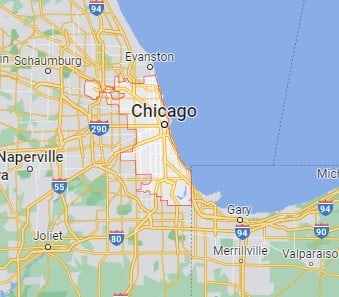
Services We Offer Chicago Small Businesses
Custom business plan prices range from $500 to $5,000 based on your needs.
Illinois Business Plan Writer Region Serving: Chicago | Naperville | Schaumburg | Aurora | Joliet | Rockford | Springfield
Key Takeaways
- Chicago business plans must account for high costs, dense competition, and neighborhood-specific dynamics to remain financially viable.
- SBA plans require conservative projections, strong collateral positioning, and detailed financial assumptions tied to local market conditions.
- Investor plans must clearly define scalability, market share strategy, and differentiation in saturated Chicago industries.
- Startup plans need to address zoning, licensing, seasonal demand shifts, and operational realities unique to Chicago’s neighborhoods and logistics network.
Mini Case Study - Chicago area Family Fun Center
"Dr. Paul recently worked with a Family Fun Center preparing to raise $750K in equity financing for their new 15,200-square-foot entertainment facility in the Chicago area. We provided full industry research, a professionally written business plan, and a complete financial model tailored to their mix of video games, laser tag, and golf simulators. The final package gave the owners a credible, investor-ready presentation demonstrating strong market demand and clear growth potential."
Ready to Stand Out in Chicago's Competitive Market?
Text or Call Dr. Paul Today - 321-948-9588
Popular Industries in Chicago
Used Car Sales
Pizzeria
How Dr. Paul’s Business Plans Help Owners Compete in Chicago’s Most Competitive Industries
| Industry | Business Plan Focus | How Dr. Paul’s Business Plan Creates Competitive Advantage |
|---|---|---|
| Used Car Dealership (Chicago) | Executive Summary | In a crowded, price-sensitive used car market, lenders, investors, and partners often decide whether to keep reading within the first page. Dr. Paul structures the executive summary to clearly explain inventory strategy, sourcing methods, pricing discipline, financing terms, compliance awareness, and realistic revenue drivers specific to Chicago’s market. |
| Pizzeria (Chicago) | Best-Case / Worst-Case Scenario Planning | Chicago’s pizzeria market is intensely competitive and sensitive to volume swings, labor costs, food inflation, and seasonality. Dr. Paul builds best-case and worst-case scenarios that show how changes in foot traffic, delivery demand, food costs, and labor affect cash flow and profitability. |
Which Plan Do You Need?
SBA business plans
SBA business plans for Chicago must be conservative, detailed, and grounded in the city’s high-cost environment, especially in areas like the Loop, River North, and West Loop. Lenders expect clear use of funds, strong collateral positioning, and realistic financial projections that account for lease rates, labor costs, and seasonal revenue fluctuations. Traffic patterns, permitting timelines, and local competition should be built directly into revenue assumptions to demonstrate repayment ability.
Investor plans
Investor plans in Chicago must focus on scalability within dense, competitive neighborhoods and clearly define how the business will capture market share. This includes outlining customer acquisition costs, pricing strategy, and differentiation in saturated markets like food service, retail, and services. Strong financial modeling, growth projections, and exit potential are critical to attract investors in a market driven by performance and competition.
Startup plans
Startup plans for Chicago businesses must address zoning, licensing, and startup costs tied to specific neighborhoods, along with foot traffic patterns and access to transit or logistics hubs like O’Hare. Plans should reflect seasonal impacts, especially winter slowdowns, and include detailed operating strategies that account for staffing, supply chains, and local demand variations across the metro area.
Ready To Get Started?
FAQs
Why are business plans more detailed for Chicago businesses?
Chicago’s high costs, strict regulations, and intense competition require more precise financial planning and operational detail to succeed.
What makes an SBA business plan successful in Chicago?
A strong SBA plan in Chicago includes conservative revenue projections, clear use of funds, and detailed assumptions based on local costs and market conditions.
How do investor expectations differ in Chicago?
Investors in Chicago expect scalable models, strong financial projections, and clear differentiation in competitive industries like food service and retail.
What should startups consider before launching in Chicago?
Startups must plan for zoning, licensing, seasonal slowdowns, and neighborhood-specific demand patterns to operate successfully in Chicago.
Dr. Paul Borosky, DBA, MBA

Dr. Paul Borosky, MBA and DBA, CEO Partner and business plan writer, is dedicated to making CEOs stronger, sharper, and more effective, is the founder of Quality Business Plan, creator of Dr. Paul's Organize-Plan-Grow Strategy, author of numerous published books on Amazon, and publisher of over 1,000 business focused videos on YouTube. For over 14 years, he has helped entrepreneurs and small business owners turn business concepts into tangible businesses.