
Dr. Paul Borosky, DBA, MBA
Business Consultant & Author
Discipline vs. Habit: Why Willpower Runs Out
Discipline helps you begin. Habit lets you keep going on far less of it. Dr. Paul Borosky explains the difference, the jellyfish that drifts, and how to aim a habit at your version of rich.
Last Updated: 10/28/2026 · Written by Dr. Paul Borosky, DBA, MBA
The Short Answer
What Is the Difference Between Discipline and Habit?
Discipline is the effort that gets you started. A habit is something you do all the time with little conscious thought. Discipline may carry you through the first week. A strong habit can carry you through the next ten years on far less effort.
This is the core idea in Chapter 3 of Become Your Version of Rich by Dr. Paul Borosky, DBA, MBA. It stands on creativity, which designs a habit that fits your life. Ready to build one? Use how to build a habit that sticks. For the business version, see what an SOP is, which is a habit written down for a whole team. It is all part of the Become Your Version of Rich guide.
The Difference
Discipline Starts. Habit Sustains.
Most people think habits are about gritting your teeth. Dr. Paul says that is backward.
The Starter
Discipline
The effort and decision it takes to begin. It is strong early, and it costs you something every time you use it.
Ask yourself: Can I keep paying this price daily?
The Carrier
Habit
Something you do all the time with little conscious thought. It lowers the price of doing the right thing until you can afford it every day.
Ask yourself: What do I already do without deciding?
Here is how Become Your Version of Rich draws the line.
From Chapter 3 of Become Your Version of Rich
Discipline is what helps you begin. Habit is what lets you keep going on far less of it. Discipline may carry you through the first week; a strong habit can carry you through the next ten years, running quietly in the background whether you feel motivated that day or not. It never removes effort entirely, and travel, illness, and stress can still knock it loose.
Notice the last line of that passage. Dr. Paul does not claim habits are magic. Travel, illness, and stress can knock one loose. The claim is narrower and more useful: the price of the action drops. See the discipline entry in the glossary for the short version.
The Definition
A Habit Is Something You Do With Little Thought
Most people define a habit as something you do all the time. Dr. Paul adds three words: with little thought. That small addition matters. Most of your habits arrived without an invitation, built from repetition you never noticed. The work is not to have habits. You will have them either way. The work is to notice the ones running you, then decide which to keep, which to replace, and which to build on purpose.
He uses two pictures. An unconscious habit is a jellyfish. It formed on its own and carries you wherever the current goes. A conscious habit is the opposite. You chose the destination, built the routine to reach it, and now it pulls you toward the target most days without asking much of you. One drifts. The other aims.
Dr. Paul also offers a personal one. He snacks at night, and when he traces it back, the habit runs through his family. He did not choose it. He learned it by growing up around it and then repeated it for years. That is how unconscious habits work. They drift in, take hold, and one day you notice them running you.
What the Research Says
Control Shifts From Thinking to Automatic
Neuroscientists describe two systems running behavior. One is deliberate and goal-directed: it thinks things through. The other is automatic and habitual: it fires in response to a cue. When you repeat an action the same way in the same setting, control gradually shifts toward the automatic system, and the brain bundles a multi-step sequence into a single unit that costs little mental effort. That is the reason a habit saves energy. Walking the dogs and driving to the gym became one automatic chunk for Dr. Paul, so he spends his willpower on harder things.
One catch is worth knowing. When you build a new habit over an old one, the old pattern does not fully disappear. It gets crowded out, but it stays easier to slip back into when you are stressed, tired, or back in the old setting. That is the catch Dr. Paul points to in the chapter, and it is the best argument for building the good habits on purpose now, before the bad ones fill the space.
A note on the phrase “willpower runs out.” Researchers still debate how much willpower works like a battery, so treat the phrase as a practical description, not a law. What holds up is simpler: effort you must spend every single day is effort you can run out of on a bad day. A habit lowers that cost.
Sources: Yin, H. H., & Knowlton, B. J. (2006), The role of the basal ganglia in habit formation, Nature Reviews Neuroscience, 7, 464-476.
The Habit That Pays
Habits Beat Willpower With Money
The habits that matter most for this book are financial. Being frugal is a habit. Investing consistently is a habit. Dr. Paul’s favorite example is the person who has money pulled automatically from every paycheck into a retirement account before they ever see it. That person knew they would struggle to save by hand, so they built a system that moves the money before their willpower gets a vote. They set it up once and let it run.
And what does the absence of good habits look like? Chaos. People without them rebuild every day from scratch. They burn mental energy deciding things that should have been settled long ago, which leaves nothing for the big decisions. That is a life run by the current. For a famous example of habits protecting a fortune, see Warren Buffett’s daily habits. For one of a fortune with no system underneath it, see how Antoine Walker went broke.
How This Helps a Business Student
Use the Distinction in Class, in Cases, and in Your Own Budget
Most textbooks blur the two words. Keeping them apart earns marks and builds a better semester.
On the Exam
Define habit with the three extra words
Write that a habit is something you do all the time with little conscious thought. Then contrast it with discipline, which helps you begin. Add one example of each, and one example of a bad habit left unaimed.
In a Case Study
Ask what repeated behavior carried the result
Pick a person or company and name the behavior repeated for years. Then ask what it was aimed at. Warren Buffett is a clean example, and Antoine Walker shows the missing version.
In Your Own Life
Automate one money move
Set up one automatic transfer toward a goal. It removes the in-the-moment decision to save or spend. Then use the seven steps for the rest of your habits.
One Honest Caution
Some Habits Need More Than Method
Smoking, drinking, gambling, and other compulsive behaviors can involve addiction, and a method on a web page is not treatment. If a habit is harming your health, your money, or your relationships, talk with a qualified professional. This page covers ordinary habits: the ones you can notice, redesign, and build on purpose.
Do This Tomorrow
Three Steps for Tomorrow
- Write down three habits that run your day without you deciding. Mark each: keep, replace, or build on purpose.
- Pick one to start with. Choose the easy way in, either a small new habit or a replacement for one you already have.
- Set up one automatic transfer toward a savings or debt goal, so it happens before you can spend it.
You are not trying to be stronger. You are trying to make the right thing the path of least resistance. The next page shows how, in seven steps: how to build a habit that sticks. Then see where a habit goes with no finish line, in Franklin vs. Napoleon.
The Book
Chapter 3 Gives You the Full System
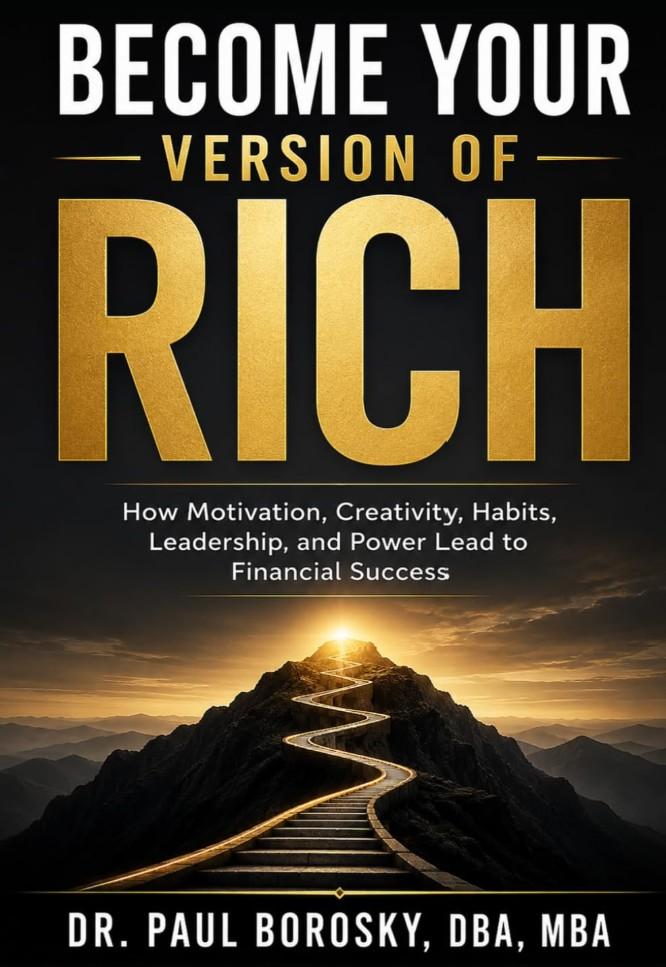
This page covers the idea. Become Your Version of Rich gives you the seven-step method and the people who prove it.
- The seven-step habit method, including the missed-day plan
- Warren Buffett, Benjamin Franklin, and Napoleon, three lives run on repeated behavior
- A South Florida business owner who turned personal habits into company processes
- The Antoine Walker cautionary tale and the first brick of a wealth-keeping system
- Daily Actions and a 30-day way to measure real progress
Go Further With Dr. Paul
Write the Plan Your Habits Will Serve
Habits need a target. Dr. Paul’s industry-specific business plan templates give you a formatted Word plan and an Excel financial model, so the numbers you review every month live somewhere real. Built on 1,000+ client engagements.
Keep Going
More From Chapter 3
FAQ
Common Questions About Discipline and Habit
What is the difference between discipline and habit?
Why does willpower run out?
Can good habits be built on purpose?
Dr. Paul Borosky, DBA, MBA
Business Consultant, Author & Educator | 14+ Years | 1,000+ Clients Served
Dr. Paul Borosky, DBA, MBA is a business consultant, author, and educator, and the founder of Quality Business Plan. He helps small business owners across the United States and Canada with business planning, financial modeling, fractional CFO services, and the everyday problems of businesses that depend too much on their owners. He is the creator of Dr. Paul's Organize-Plan-Grow™ Strategy, author of numerous published books on Amazon, and publisher of over 1,000 business-focused videos on YouTube. He has taught as an adjunct college instructor and teaches in Florida public schools.
This page is for general educational purposes only. It is not investment, tax, legal, financial, or retirement advice, and it does not guarantee any particular financial result. The examples, figures, and calculations are illustrative planning tools, not recommendations. Before making significant financial decisions, consult a qualified professional.