
Dr. Paul Borosky, DBA, MBA
Business Consultant & Author
Why Did BlackBerry Fail?
BlackBerry owned the smartphone, then lost it. Dr. Paul Borosky reads the fall at the level of the decision: one assumption, defended for years, until the market answered for it.
Last Updated: 10/28/2026 · Written by Dr. Paul Borosky, DBA, MBA
The Short Answer
Why Did BlackBerry Fail?
BlackBerry assumed that what made it great, the keyboard, the secure network, and enterprise email, would stay what customers valued most. It stopped asking how to make the product better, even if better meant abandoning what it loved, and the market moved on.
This is the cautionary tale in Chapter 2 of Become Your Version of Rich by Dr. Paul Borosky, DBA, MBA. It pairs with what creativity means in business and the method in how to be more creative. If you lead a team through a shift like this one, see what change management is. The full set lives in the Become Your Version of Rich guide.
What Happened
From Canada’s Most Valuable Company to a Leadership Exit
At the top, RIM had nearly everything. Four years later, it had a new management team.
- 2007The iPhone launches. RIM executives publicly play down its influence. In the book Losing the Signal, co-CEO Mike Lazaridis is reported to say the iPhone “is going to collapse the network,” and Jim Balsillie to answer, “It’s OK. We’ll be fine.”
- Mid-2008RIM peaks near $83 billion, ahead of Royal Bank as Canada’s most valuable company. Its touchscreen answer, the BlackBerry Storm, arrives the same year.
- 2009RIM reaches 19.9 percent of worldwide smartphone sales in the first quarter, up from 13.3 percent a year earlier. Reports describe the Storm’s reception as poor.
- 2010 to 2011The PlayBook tablet struggles with a thin app selection. RIM cuts 11 percent of its workforce in June 2011 and suffers a four day outage in October.
- January 2012Co-CEOs Mike Lazaridis and Jim Balsillie step down under investor pressure.
Sources: Global News, RIM’s rise and fall: a short history of Research In Motion. Maclean’s, BlackBerry plummets as iPhone and Android sales soar. Daily FT (Sri Lanka), BlackBerry co-founders knocked off billionaires’ list. Network World, Apple and RIM gain as smartphone sales grow (Gartner figures). TechRadar, The 11 moments that defined BlackBerry’s rise and fall. BGR, Here’s what BlackBerry’s co-CEOs said the first time they saw the iPhone (quotes as reported from Losing the Signal).
Sources differ on the exact peak and on some figures. The shape of the story does not.
The Assumption
Everything Rested on One Belief
Dr. Paul asks you to notice what made RIM great. A physical keyboard people loved, the best mobile email of its day, a private messaging network, and a security reputation. All of that was real. They had won.
The trouble was not a lack of creativity. RIM had been wildly creative on the way up. The trouble was one assumption underneath every later choice: that those same strengths would stay what customers valued most. The company stopped asking the question this chapter is built on. How can we make this better, even if better means abandoning what we love?
Dr. Paul reads what followed as dominoes. Having bet on the keyboard, you have to prove the touchscreen is a fad. Then you have to explain away the app economy, then full touchscreens, then Android. Each denial required the next. Reports at the time describe the Storm as a defensive answer with a poor touchscreen experience, and the money, in Dr. Paul’s phrase, went where it always goes in these stories: into defending the past instead of inventing the future. That reading is interpretation. The dates, prices, and share figures above are the record.
Your Smaller Version
When the Strong Vision Stops Listening
This is the part of the story most managers can use.
Dr. Paul gives the managerial version in Become Your Version of Rich.
From Chapter 2 of Become Your Version of Rich
Sometimes the person with the strong vision stops listening. They get so certain of their own idea that they stop taking input, and that is when creativity curdles into blindness. RIM was too in love with its own answer to hear the market telling it the question had changed. Your version is falling in love with your own plan or product and refusing the feedback that would have saved it.
The fix is the opposite instinct. When you combine your creativity with other people’s, inviting their input and letting it change your thinking, you do not add creativity. You multiply it. Stay in love with the question, not with your answer. That is the test in the method’s fifth step, where real customers outrank your own opinion.
How This Helps a Manager
Run a BlackBerry Check on Your Own Team
You may never run a phone company. You will run a plan that someone on your team is in love with, maybe you. Three places to apply the check.
In Planning Reviews
Invite the strongest objection
Ask one person to argue against the plan, and reward them for it. A plan that survives honest pushback is stronger. A plan nobody dares challenge is where BlackBerry lived. The effective meeting guide shows how to make the room safe for it.
When Customers Change
Watch behavior, not opinion
List what customers do, not what they say, and compare it to the assumption your product rests on. When behavior and assumption disagree, believe behavior. Use root cause analysis to find which belief is failing.
When You Must Change
Name what you are willing to give up
Write down what you love about the current model, then ask what you would build if you started today. Then plan the move with change management so your people come with you.
One Honest Caution
Hindsight Makes Everyone Look Foolish
BlackBerry’s leaders were capable people who faced a hard shift. Many factors hit the company, including apps, platforms, supply, and timing, and no single page captures them all. This page isolates one lesson, an unquestioned assumption, and draws it at the level of the decision. It is not a verdict on the people.
Do This Tomorrow
Three Steps for This Week
- Write down the one assumption your current plan depends on most. Ask: what would have to be true for this to be wrong?
- Ask two customers or front-line team members what they do instead of using your product, and listen without defending.
- Schedule a set review date. Decide in advance what evidence would change the plan, and write it down.
The review date matters. It turns a feeling into a rule, the same way a driver statement does. For another company that confused size with a destination, read why WeWork failed.
The Book
The BlackBerry Story Closes Chapter 2
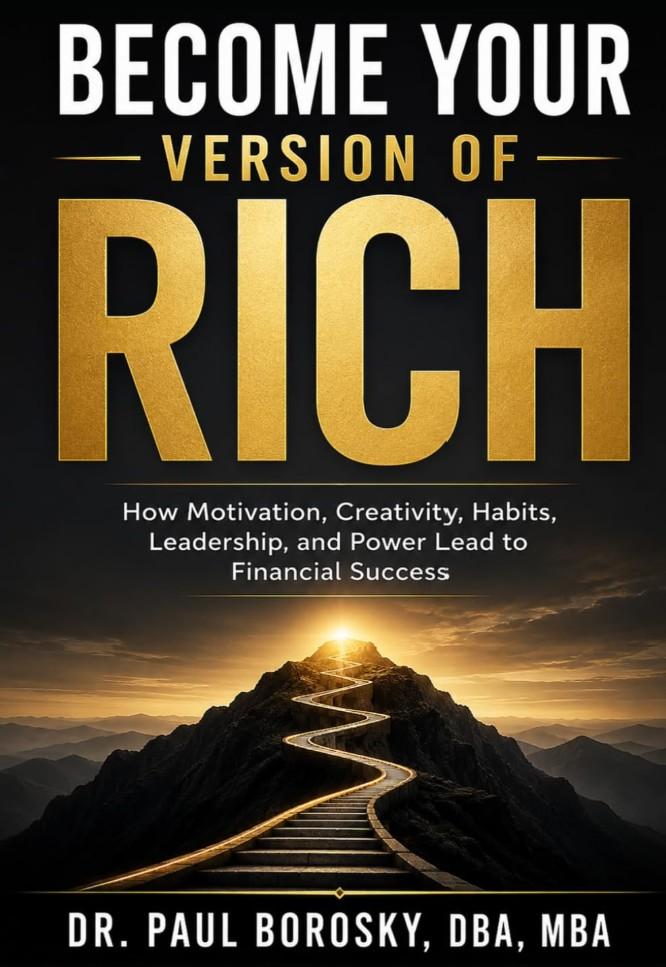
This page covers one cautionary tale. Become Your Version of Rich places it beside three people who used creativity and what each one did with it.
- The seven-step creativity method and the stop rule
- Nikola Tesla and Benjamin Franklin, two ways creativity plays out
- Napoleon, and why creativity with no destination does not save you
- The BlackBerry cautionary tale and the question to keep asking
- Daily Actions, and a 30-day plan built to make you ship
Go Further With Dr. Paul
Pressure-Test Your Plan Before the Market Does
Dr. Paul’s business growth plan consulting includes an assumptions review: what must be true for your plan to work, and how you would know early if it is not. Built on 1,000+ client engagements.
Keep Going
More From Chapter 2 and the Cautionary Tales
FAQ
Common Questions About BlackBerry’s Failure
Why did BlackBerry fail?
How much was BlackBerry worth at its peak?
What can a business owner learn from BlackBerry?
Dr. Paul Borosky, DBA, MBA
Business Consultant, Author & Educator | 14+ Years | 1,000+ Clients Served
Dr. Paul Borosky, DBA, MBA is a business consultant, author, and educator, and the founder of Quality Business Plan. He helps small business owners across the United States and Canada with business planning, financial modeling, fractional CFO services, and the everyday problems of businesses that depend too much on their owners. He is the creator of Dr. Paul's Organize-Plan-Grow™ Strategy, author of numerous published books on Amazon, and publisher of over 1,000 business-focused videos on YouTube. He has taught as an adjunct college instructor and teaches in Florida public schools.
This page is for general educational purposes only. It is not investment, tax, legal, financial, or retirement advice, and it does not guarantee any particular financial result. The examples, figures, and calculations are illustrative planning tools, not recommendations. Before making significant financial decisions, consult a qualified professional.