
Dr. Paul Borosky, DBA, MBA
Business Consultant & Author
Why Did J.C. Penney Fail Under Ron Johnson?
A brilliant executive tried to rebuild a department store in one move. Dr. Paul Borosky reads what happened at the level of the decision, and shows the small version of the same mistake that managers make with five people instead of a thousand stores.
Last Updated: 10/28/2026 · Written by Dr. Paul Borosky, DBA, MBA
The Short Answer
Why Did J.C. Penney Fail Under Ron Johnson?
J.C. Penney failed under Ron Johnson because he changed the whole company at once. He dropped coupons and sales for everyday low prices in every store, ran no meaningful pilot, and did not ask the customers who loved the old way. Revenue fell 25 percent in one year.
This is the cautionary tale in Chapter 4 of Become Your Version of Rich by Dr. Paul Borosky, DBA, MBA. It sits at the end of the leadership chapter, right after the two-week vacation test. For the process side of rolling out a change, see what change management is. The whole set lives inside the Become Your Version of Rich guide.
What Happened
A Bold Plan, Rolled Out All at Once
Dr. Paul keeps the focus on the decision. The man was talented, and the plan looked elegant on paper.
- Late 2011J.C. Penney hires Ron Johnson, the executive who helped build Apple’s retail stores.
- 2012He replaces coupons and most sales events with everyday low prices, across the chain.
- The following fiscal yearRevenue falls 25 percent as long-time customers drift away.
- April 2013The board removes Johnson and rehires his predecessor, Mike Ullman. Coupons and weekly sales return.
Sources: MPR News, JC Penney ousts CEO Ron Johnson (April 2013). Time, The 5 Big Mistakes That Led to Ron Johnson’s Ouster at JC Penney.
Different outlets count Johnson’s tenure as 16 or 17 months. The point does not change.
The Decisions
The Vision Was Not the Mistake. The Rollout Was.
Three choices explain most of the damage. Each one is available to a leader at any size.
Decision one
Bet it all at once
The new pricing went out chain-wide on the same day. If it was wrong, every store paid for it.
Ask yourself: What is the smallest place I could try this first?
Decision two
Skip the test
Time reports that Johnson rejected a limited test, saying “We didn’t test at Apple.” A store chain is not a product launch.
Ask yourself: What evidence would change my mind, and when will I see it?
Decision three
Kill the old model first
Core customers liked hunting for coupons. Johnson later admitted they enjoyed them more than he understood.
Ask yourself: Who loves the current way, and did I ask them?
The diagnosis in the book is one flawed assumption: that a leader can impose a sweeping change on customers and staff faster than the evidence, the communication, and the organization can absorb it. Dr. Paul stresses that the collapse had other causes too, including the pricing message, the merchandise, the store experience, and a brutal retail market. They gathered under that one assumption.
Listening
He Led From His Own Vision, Not His Customers’ Reality
Time reports that Johnson put the reaction down to customers needing to be “educated” about the new pricing. That is the sentence to remember. When a result disappoints, there are two readings. Either the customer is wrong, or the plan is. Only one of those can be tested cheaply.
This is the authority and trust gap from the chapter, seen at the scale of a public company. A title let Johnson order the change. It could not make customers want it. See why BlackBerry failed for the mirror image: a company that kept asking the same question after the world changed.
The Fix
The Pilot Rule: Test Small, Then Scale
A pilot does not slow a good idea down. It tells you whether the idea is good.
- Shrink the change to one place. One store, one team, one region, one customer group. Pick a place that is typical, not your best.
- Write the success test first. Name the number or behavior that means yes, and the one that means stop, before you see any results.
- Ask the people who like the old way. Their objections tell you what the new way must replace.
- Run it long enough to learn. Weeks, not days, unless a safety issue forces your hand.
- Scale, change, or stop. Roll out only what passed. Keep the old model alive until the new one has proved itself.
Here is how Become Your Version of Rich sums up the lesson.
From Chapter 4 of Become Your Version of Rich
But leadership is knowing what you know and knowing what you do not, and what you never fully know is what your customers and your front line are thinking until you ask them. Lead boldly, but test before you bet the business, listen before you impose, and do not tear down what is working until you have proven the replacement works better.
What the Research Says
Big Changes Need Early Proof
Harvard professor John Kotter studied failed transformation efforts and listed the common errors. One of them is failing to create short-term wins: visible, early evidence that the change is working. A pilot is a short-term win you create on purpose, and it keeps the organization from bracing for a long bet it cannot see paying off.
Entrepreneur Eric Ries made a similar point for startups. His build, measure, learn loop treats a new plan as a set of assumptions to test with the smallest real version, which is the same move as step seven in the creativity method. Neither idea is a promise. Both are habits that make expensive mistakes cheaper.
Sources: Kotter, J. P. (1995), Leading Change: Why Transformation Efforts Fail, Harvard Business Review, 73(2), 59-67. Ries, E. (2011), The Lean Startup, Crown Business.
How This Helps a Manager
Use the Pilot Rule on Changes You Roll Out
Managers inherit plans and announce changes. Three moments call for a pilot before the announcement.
Before You Announce a Change
Pilot it with one team
A new schedule, tool, or process lands harder than it looks on a slide. Try it with one team first, then read change management for how to bring the rest along.
When Your Front Line Pushes Back
Treat resistance as data
The people closest to the work see what you cannot. Ask what the change breaks. If the answer repeats, trace it with root cause analysis before you press on.
When You Inherit a Plan
Ask who was never asked
A plan with no customer or frontline voice in it is a vision, not evidence. Add the missing voice, then use how to execute a plan to stage the rollout.
One Honest Caution
Hindsight Makes Every Decision Look Obvious
The collapse had many causes, and this page describes publicly reported events as general education. It is not a verdict on any person or a prediction about any company. Test-first is not always possible or wise: safety fixes, legal deadlines, and true emergencies may force a full rollout. When they do, say so plainly and watch the early results closely.
Do This Tomorrow
Three Steps for This Week
- Pick one change you are planning. Write down the smallest version you could test in one place.
- Ask five customers or frontline people what they like about the current way. Write down their answers word for word.
- Write the stop rule and the scale rule on one line each, with dates, before you start.
Listening costs nothing but a little pride. Do it before you announce, not after the results come in. Then read how power goes wrong when nobody can say no in what went wrong at Uber, or see leadership done well in Madam C.J. Walker’s story.
The Book
Chapter 4 Has the Full Leadership Method
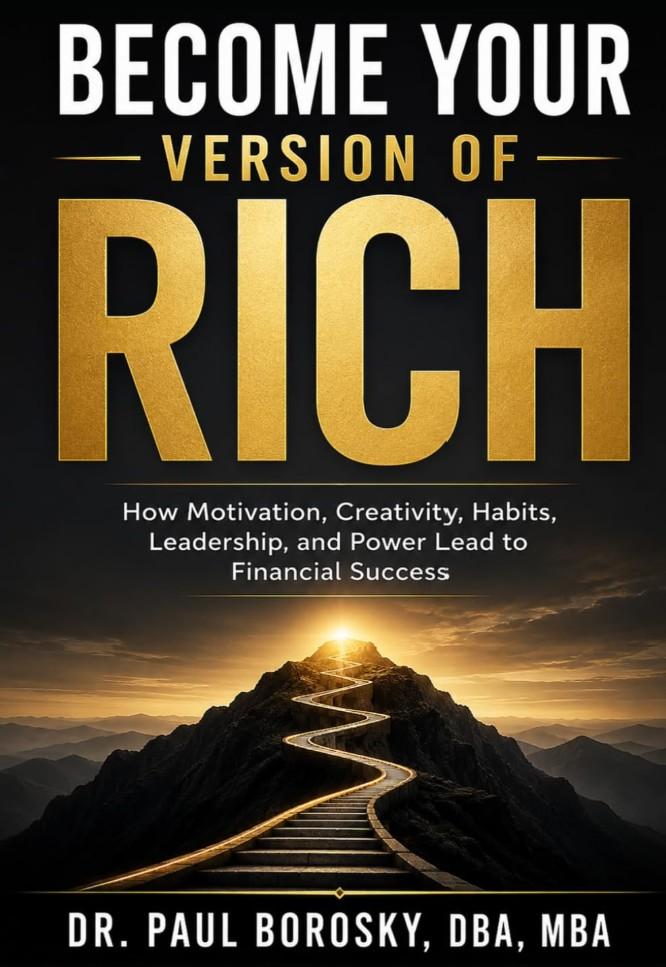
This page covers one cautionary tale. Become Your Version of Rich places it beside three people who led without needing a title.
- The seven-step leadership method, from direction to successors
- Madam C.J. Walker, Benjamin Franklin, and Napoleon, three leaders with no title that mattered
- A quiet garlic farmer who kept good people for years
- The two-week vacation test
- Daily Actions and a 30-day check on whether your standards hold through other people
Go Further With Dr. Paul
Test Your Growth Plan Before You Bet On It
Dr. Paul’s business growth plan consulting turns a big idea into staged milestones, a pilot, and a review rhythm, so you learn early and cheaply. Built on 1,000+ client engagements.
Keep Going
More From Chapter 4
FAQ
Common Questions About J.C. Penney and Ron Johnson
Why did J.C. Penney fail under Ron Johnson?
What was Ron Johnson’s biggest mistake at J.C. Penney?
How can a small business avoid a J.C. Penney style mistake?
Dr. Paul Borosky, DBA, MBA
Business Consultant, Author & Educator | 14+ Years | 1,000+ Clients Served
Dr. Paul Borosky, DBA, MBA is a business consultant, author, and educator, and the founder of Quality Business Plan. He helps small business owners across the United States and Canada with business planning, financial modeling, fractional CFO services, and the everyday problems of businesses that depend too much on their owners. He is the creator of Dr. Paul’s Organize-Plan-Grow™ Strategy, author of numerous published books on Amazon, and publisher of over 1,000 business-focused videos on YouTube. He has taught as an adjunct college instructor and teaches in Florida public schools.
This page is for general educational purposes only. It is not investment, tax, legal, financial, or retirement advice, and it does not guarantee any particular financial result. The examples, figures, and calculations are illustrative planning tools, not recommendations. Before making significant financial decisions, consult a qualified professional.