
Dr. Paul Borosky, DBA, MBA
St. Petersburg Business Consultant
Opening a Second Location in St. Petersburg?
Rule of thumb: if store one cannot get through a full week without you, store two will not either. Dr. Paul, St. Petersburg business consultant, works with owners who are excellent at the craft and newer to the business side, and he helps you build that side before you sign a second lease.
The test for any second location, St. Petersburg or anywhere else, has three parts. Store one runs on written systems. It has a leader who is not you. And it throws off enough cash to carry store two through its slow start. Miss one, and the new shop borrows from the old one until both feel it. Run the test on paper before you tour a single space.
Weighing a second lease right now? Call or text (321) 948-9588.
Last Updated: 10/29/2026 · Written by Dr. Paul Borosky, DBA, MBA
Red Flags
Eight Signs Store One Cannot Carry Store Two Yet
Two or more of these, and store two is a project for next year. That is not a no. It is a to-do list.
- You open and close most days. If you are the key, store two needs a second you.
- Training means “watch me.” Nothing is written, so every new hire learns a slightly different version.
- You check the bank balance to see how the month went. No monthly profit report, no cash forecast.
- Your best employee has never been told what they could own. Growth needs a leader, and nobody has been asked.
- Prices change depending on who quotes them. Two stores will make that twice as messy.
- You have less than three months of costs in the bank. Store two will spend that before it earns it.
- Store one’s sales are flat or down this year. A new location rarely fixes a tired one.
- The reason for store two is a space you loved. The space should come last, after the math.
Most of these trace back to one problem: the business lives in your head. The small business management guide covers how to get it out and onto paper.
Ready for Help?
Four Ways to Work With Dr. Paul
01 · Start Here
Business Consulting
Bring the location you are looking at. Dr. Paul helps you test the cash, the systems, and the people before you sign.
Business consulting →02
Business Plan Writing
Financing the build-out? Dr. Paul helps you build the plan and five-year financials a lender needs to see for a second location.
Business plan writing →03
Fractional CFO/COO
Two locations, two sets of numbers. Dr. Paul works with you part time so you can see both stores clearly every month.
Fractional CFO and COO →04
Small Business Education
Free guides on SOPs, hiring, delegation, and cash flow for owners who learned the craft first and the business second.
Free guides →Show the Math
The Cash Bridge: What Store Two Costs Before It Pays
A made-up shop with round numbers. Swap in your own.
Illustration only · not St. Petersburg market data| Item | Illustration |
|---|---|
| Build-out and equipment | $85,000 |
| Deposits and first month of rent | $12,000 |
| Opening inventory and supplies | $15,000 |
| Hiring and training before opening day | $8,000 |
| Ramp-up losses: six months at $6,000 a month | $36,000 |
| Cushion at 20 percent of everything above | $31,200 |
| Cash the bridge has to carry | $187,200 |
Now the honest part. Say store one throws off $7,500 a month after you pay yourself. Paying for store two from store one’s cash alone would take about 25 months of saving. So the real choices are: borrow part of it, wait and save, or shrink store two until the bridge fits. Each is fine. Signing the lease without knowing which one you picked is not.
Notice the ramp-up line. Owners budget the build-out and forget that a new location loses money for months while it finds its customers. That line is what drains store one. A fractional CFO watches it monthly so you see the problem early.
The Central Avenue Question
Eyeing Central Avenue? Read the Storefront Corridor Rules First
St. Petersburg’s Storefront Conservation Corridor Plan covers Beach Drive and Central Avenue, from the waterfront to 31st Street. It was written to promote independently owned businesses, and it shapes what a second shop there can look like.
Storefront widths have limits
The plan sets a minimum and a maximum width for street-level storefronts. WUSF reported it keeps owners from combining several small storefronts into one big shop. The floor plan in your head may not fit.
Grants for eligible businesses
The city lists up to $20,000 in grant funding for eligible businesses, with the full rules in its program guidelines. Ask whether a business with two locations still qualifies before you count on it.
Landlords get an incentive too
Property owners can receive a $10,000 incentive for leasing to a local, independent business. That could give you some room when you talk terms on store two.
Sources: City of St. Petersburg, Storefront Conservation Corridor Program; WUSF, “St. Petersburg approves plan to preserve sections of downtown” (May 2, 2019).
Picking a second location? St. Petersburg’s corridor rules could shape the size, the rent talk, and the budget all at once. A smaller storefront may mean less inventory, a tighter crew, and a different sales target than store one. Put those numbers into the cash bridge above before you fall for a space.
From the Book
Dr. Paul’s Insight: The Business in Your Head
“Beatrix. How many steps are in a morning harvest? From the first hive to the first capped jar on the cart.”
Beatrix started to answer, stopped, and thought. You could watch her thinking.
“I don’t know,” she said finally, and it clearly frightened her. “I’ve never counted. A hundred?”
“Let us find out.”
Dr. Paul’s take: That is the real second-location question. Not the lease, not the rent on Central Avenue. How many steps are in your opening, your best-selling service, your close? If you cannot count them, you cannot hand them to a manager across town, and store two becomes a different business with your name on it. Count the steps, write them down, and test them at store one first. Dr. Paul’s guide to what a standard operating procedure is shows you how to start.
The St. Petersburg Side
Where Your Second Location Goes in St. Petersburg
St. Pete is a city of districts, and each one draws a different customer. Store two may not belong in the same kind of neighborhood as store one.
Grand Central District
A Main Street district known as home to 450 locally owned, independent businesses. Strong neighbors can bring foot traffic. They can also mean your competition is next door.
EDGE District
An award-winning Main Street district between Dr. MLK Jr. and 16th Streets, along 1st Avenues North and South.
Warehouse Arts District
A walkable, bikeable district along 16th and 31st Streets between 10th Ave. S. and 1st Ave. N. A maker, a studio, or a shop that needs room more than walk-ins could look here.
Source: St. Pete Downtown Partnership, Districts.
The Paperwork Tied to an Address
The City of St. Petersburg requires a business tax receipt for businesses located inside the city, and the receipt follows the location: a business that moves has to transfer it. Receipts expire September 30 every year. A commercial space may also need a Certificate of Occupancy. Ask the Business Tax Division, 325 Central Ave., 1st Floor, how your second address is handled before you sign anything.
For workshops and cohort training, the Greenhouse at 440 2nd Avenue North is run by a team from the City and the St. Petersburg Area Chamber of Commerce.
Sources: City of St. Petersburg, Business Tax; The Greenhouse, About.
When the question shifts from “where” to “can we afford it,” that is where a business consultant for St. Petersburg owners earns his keep. The Tampa Bay pillar covers the rest of the growth questions in the region.
The Countdown
The 120 Days Before Store Two Opens
Start the clock here, not at the lease signing.
- Day 120 outRun the cash bridge.
Opening costs, ramp-up losses, cushion. Decide how you will pay for it: save, borrow, or shrink.
- Day 90 outWrite the playbook at store one.
Opening, closing, the top five jobs, pricing. Test it by having someone else follow it while you watch.
- Day 60 outName both leaders.
One person runs store one. One runs store two. Neither one is you.
- Day 30 outHire and train with the playbook.
New staff learn from the written steps, at store one, before they ever see store two.
- Opening day to day 90Watch both stores weekly.
Sales, labor, and cash for each location, side by side. The accounting and finance guide explains which numbers to watch.
Write It Down First
SOPs, Delegation, and the First Manager, in One Book
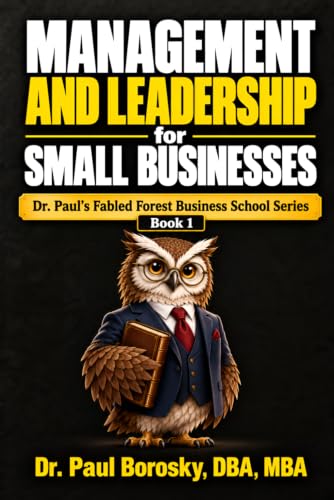
Dr. Paul’s Fabled Forest Business School Series · Book 1
Management and Leadership for Small Businesses
Chapter 1 is the bee who never counted her steps. The chapters after it cover delegation, the manager’s job, onboarding, and organizational structure: everything a second location needs before it opens.
Get Book 1 on Amazon →FAQ
Second Location Questions St. Petersburg Owners Ask
When is a business ready for a second location?
How much cash do I need to open a second location?
Do I need a separate business tax receipt for a second location in St. Petersburg?
How does Dr. Paul help with a second location?
Count the steps before you count the square feet.
Call or text (321) 948-9588
Keep Going
More for St. Petersburg and Tampa Bay Owners
Dr. Paul Borosky, DBA, MBA
Business Consultant, Author & Educator | 14+ Years | 1,000+ Clients Served
Dr. Paul Borosky, DBA, MBA is a business consultant, author, and educator, and the founder of Quality Business Plan. He works with St. Petersburg and Tampa Bay owners on business planning, financial modeling, fractional CFO services, and the everyday problems of businesses that depend too much on their owners. He is the creator of Dr. Paul’s Organize-Plan-Grow™ Strategy, author of numerous published books on Amazon including Dr. Paul’s Fabled Forest Business School Series, and publisher of over 1,000 business-focused videos on YouTube. He has taught as an adjunct college instructor and teaches in Florida public schools.
This page is for general educational purposes only. It is not legal, financial, tax, accounting, or other professional advice. The worked example uses an illustrative business with rounded figures, not St. Petersburg market data. Local rules and market figures are cited to their sources and change over time. The Fabled Forest and its characters are fictional. For decisions about your own business, consult a qualified professional.