
Dr. Paul Borosky, DBA, MBA
Business Consultant & Author
How Did Antoine Walker Go Broke?
Antoine Walker earned more than $108 million as an NBA player and filed for bankruptcy in 2010. Dr. Paul Borosky reads the story at the level of the decision, and finds a missing system, not a bad man.
Last Updated: 10/28/2026 · Written by Dr. Paul Borosky, DBA, MBA
The Short Answer
How Did Antoine Walker Go Broke?
Antoine Walker went broke because money came in fast and went out fast with no system underneath to capture and protect it. A very expensive lifestyle, cash support for many people, and a real estate business that collapsed in the Great Recession all landed on a fortune with almost no structure.
This is the cautionary tale in Chapter 3 of Become Your Version of Rich by Dr. Paul Borosky, DBA, MBA. It shows what happens when income has no habit aimed at keeping it. You can start the first brick today with how to build a habit that sticks. For the choice side, see the decision making process. The set lives in the Become Your Version of Rich guide.
What Happened
From Three-Time All-Star to Chapter 7
Dr. Paul is careful here. The easy version of this story is to call him foolish. That is unkind and useless to you.
- 1996The Boston Celtics draft Antoine Walker. He becomes a three-time All-Star.
- 2006He wins an NBA championship with the Miami Heat.
- About 2008He retires, roughly two years before his bankruptcy filing.
- During the Great RecessionThe downturn collapses his Chicago real estate firm, which was left holding a large amount of undeveloped land. He had put his personal portfolio up as collateral and repays about $20 million to banks.
- 2010He files for Chapter 7 bankruptcy.
Sources: CNN Money, report on Antoine Walker’s bankruptcy (July 2015). See also CNBC, NBA star reveals what he learned from losing $100 million and going bankrupt (July 2016).
Walker has spoken openly about this period. The figures come from his own account as reported by CNN, so treat exact amounts as his, not an audit.
The Decisions
Money In Fast, Money Out Fast
By his own account, Walker said he “created a very expensive lifestyle,” with cars, jewelry, and homes. He estimated that he helped about 30 people move to better situations, giving cash often without accountability, and called himself “an open ATM throughout my career.” His real estate firm, Walker Ventures, collapsed when the Great Recession hit and left it holding undeveloped land. He has said gambling was not the main cause, and that media reports overstate its role.
None of those items is one mistake. Together they describe a fortune with income and no structure. Walker told CNN it was sad to see other athletes work so hard and then lose it in two or three years. His advice to young players was to get the word “no” into their vocabulary and be prepared to use it a lot.
The Missing System
What a Wealth-Keeping System Actually Includes
This is the part you can act on, because one piece of it is available this week.
Controls
Controlled spending
A budget you built once and check every month, so lifestyle cannot quietly outgrow income.
Automation
Automatic saving
Money moved before you can touch it, so the decision to save does not depend on willpower.
Protection
Limits and advice
Taxes planned, assets diversified, limits on money you guarantee for others, and good advice you listen to.
Dr. Paul draws the practical line this way in Become Your Version of Rich.
From Chapter 3 of Become Your Version of Rich
Automatic saving is not the magic single habit that guarantees wealth; it is one important piece of a larger system. But it is the piece you can set up this week, and it removes the hardest part, the in-the-moment decision to save rather than spend, which is exactly what habits are for. Without a system, every dollar you manage to keep depends on winning that decision fresh, over and over, forever, and no human being wins it every single time.
High income never substitutes for a complete system. Walker had oceans of income and almost none of that structure. The ordinary person with retirement money pulled from every paycheck gives themselves a better chance of retiring secure on a tiny fraction of his income, because they installed the one habit he never did. That is a general principle, not a promise. Your own situation depends on your income, taxes, and goals, so ask a qualified professional.
Your Smaller Version
Lifestyle Creep Is the Ordinary Version
You will likely never earn $108 million. You can still make the quiet version of Walker’s mistake. You get a raise and your spending rises to swallow it. You get another, and it swallows that too. You never feel rich, because you never built the automatic habit of setting money aside before you can spend it.
The fix is not more income and it is not more willpower. Walker had oceans of the first, and it did not save him. The fix is a system, and its first brick is a habit you install once and leave running: pay yourself first, automatically, before the money reaches your hands. Then decide how much is enough using the enough line, and compare it with another story in how MC Hammer went broke.
How This Helps a Business Student
Use This Case to Separate Income From Wealth
Finance courses define income, wealth, and net worth. This case shows why the three move apart.
On the Exam
Define wealth-keeping as a system
State that income is what comes in, wealth is what you keep, and the gap is a system. List six parts: controlled spending, automatic saving, tax planning, diversification, limits on guarantees for others, and good advice.
In a Case Study
Map the missing pieces
Take the facts as reported, then mark which of the six parts were present. Avoid judging character, and stay at the level of the decision. The same method works on MC Hammer.
In Your Own Budget
Lay the first brick this week
Set up one automatic transfer the day you are paid. Then use the financial independence number to see what that transfer is building toward.
One Honest Caution
Educational Only, and Not a Judgment
This page describes publicly reported events and is not a verdict on any person. It is general education, not investment, tax, legal, or financial advice, and it does not guarantee any outcome. Facts come from Walker’s own reported account. Before you make significant financial decisions, consult a qualified professional.
Do This Tomorrow
Three Steps for This Week
- Pick one habit to build or replace around money. Shrink it to a version you cannot talk yourself out of, such as ten dollars a paycheck.
- Automate one transfer toward an emergency fund, targeted debt, or a long-term investment, the moment you get paid.
- Write down your spending rule for the next raise. Decide in advance how much of any increase goes to savings before you see it.
A full system is a lot to build at once. One piece, an automatic transfer, takes under an hour and removes the hardest decision. Then read Warren Buffett’s daily habits to see habits protecting a fortune instead of missing from one.
The Book
The Antoine Walker Story Closes Chapter 3
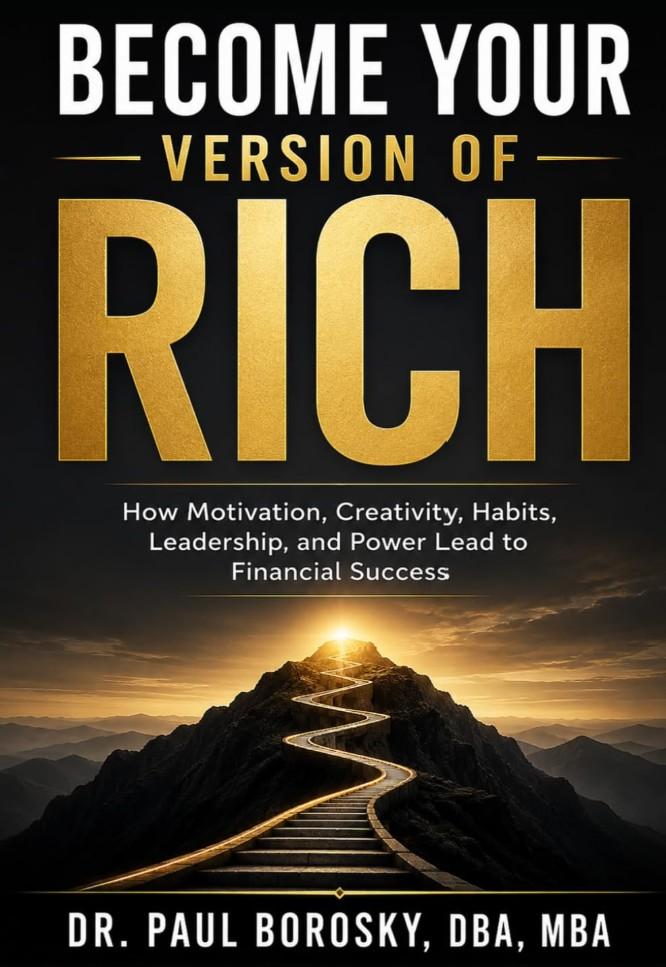
This page covers one cautionary tale. Become Your Version of Rich places it next to three people who built habits on purpose.
- The seven-step habit method, including the missed-day plan
- Warren Buffett, Benjamin Franklin, and Napoleon, three lives run on repeated behavior
- A business owner who turned personal habits into company processes
- The full Antoine Walker cautionary tale and the first brick of a system
- Daily Actions and a 30-day way to measure real progress
Go Further With Dr. Paul
Build the Target Before You Build the System
A wealth-keeping system needs a target. Dr. Paul’s business growth plan consulting turns a vision into a written target, the numbers behind it, and a review rhythm you can follow. Built on 1,000+ client engagements.
Keep Going
More From Chapter 3 and the Money Stories
FAQ
Common Questions About Antoine Walker’s Bankruptcy
How did Antoine Walker go broke?
How much money did Antoine Walker make in the NBA?
What can ordinary people learn from Antoine Walker?
Dr. Paul Borosky, DBA, MBA
Business Consultant, Author & Educator | 14+ Years | 1,000+ Clients Served
Dr. Paul Borosky, DBA, MBA is a business consultant, author, and educator, and the founder of Quality Business Plan. He helps small business owners across the United States and Canada with business planning, financial modeling, fractional CFO services, and the everyday problems of businesses that depend too much on their owners. He is the creator of Dr. Paul's Organize-Plan-Grow™ Strategy, author of numerous published books on Amazon, and publisher of over 1,000 business-focused videos on YouTube. He has taught as an adjunct college instructor and teaches in Florida public schools.
This page is for general educational purposes only. It is not investment, tax, legal, financial, or retirement advice, and it does not guarantee any particular financial result. The examples, figures, and calculations are illustrative planning tools, not recommendations. Before making significant financial decisions, consult a qualified professional.