
Dr. Paul Borosky, DBA, MBA
Systems, From a Consultant
Still Running Your Palm Harbor Business on Spreadsheets?
If the one person who knows which spreadsheet is the real one got sick tomorrow, could anyone else close the month? In a lot of small shops, the honest answer is no.
A Palm Harbor business on spreadsheets is fine until the business depends on one person knowing which file is right. Once you have several files, several versions, and totals that do not match, move the core records into one system and keep spreadsheets for analysis. Dr. Paul, Palm Harbor business consultant, shows you how to tell if you are there. You run the trade well; Dr. Paul, who has helped 1,000+ owners make this switch, helps you build the business side that keeps up with it.
Not sure which file is the real one? Call or text (321) 948-9588.
Last Updated: 10/29/2026 · Written by Dr. Paul Borosky, DBA, MBA
Score Yourself
Seven Signs You Have Outgrown Your Spreadsheets
One point for every yes. Answer for how the business runs this month, not how it ran when you set up the files.
- Only one person knows which file has the right numbers.YES / NO
- Two files show different totals for the same thing.YES / NO
- Someone retypes the same data into more than one sheet.YES / NO
- You have emailed a file named “final” and then “final v2.”YES / NO
- Your sales total in the spreadsheet does not match the bank deposits.YES / NO
- Month-end takes days because the files have to be cleaned up first.YES / NO
- If the keeper of the files left tomorrow, nobody could rebuild them.YES / NO
Scored three or more? You are in good company. It is one of the most common things Dr. Paul sees with owners across Florida, and one of the easiest to fix once you see it.
Ready for Help?
Four Ways to Work With Dr. Paul
01 · Start Here
Business Consulting
Bring the files. Dr. Paul helps you sort which records belong in a system, which spreadsheets to keep, and what to fix first.
Business consulting →02
Business Plan Writing
Need clean financials inside a formal business plan for a lender? Dr. Paul writes the plan and the projections.
Business plan writing →03
Fractional CFO/COO
Once the system is in, Dr. Paul helps you read what it says every month, part time, so the numbers drive decisions.
Fractional CFO and COO →04
Small Business Education
Learn bookkeeping and the core reports at your own pace with free guides on accounting, finance, and operations.
Small business education →The Palm Harbor Side
No City Hall Checks Your Books. That Is the Catch.
Palm Harbor is unincorporated Pinellas County. There is no city government, and Pinellas County says businesses in unincorporated areas are not required to get a county Business Tax Receipt.
Source: Pinellas County, Occupational Licenses/Business Tax Receipts. Checked 10/29/2026. State licenses may still apply to your trade.
Less paperwork is good news. It also means fewer outside moments that force you to look at your records. A Palm Harbor owner could run for years on spreadsheets nobody else ever opens, until a lender, a buyer, or the tax preparer asks a question the files cannot answer. Two local places can help before that day comes.
Palm Harbor Chamber of Commerce
At 1151 Nebraska Ave. Bay News 9 reported the chamber grew from about 200 members in fall 2023 to nearly 500 by spring 2026, with educational trainings and computer services for members. Read the report or visit the chamber.
Florida SBDC at Pinellas County
Run by Pinellas County Economic Development. Its no-cost consulting includes accounting systems and financial literacy, a good fit for an owner sorting out which records go where. See the SBDC page.
This is a common Tampa Bay growth question, and it gets harder to fix the longer the files pile up.
From the Book
Dr. Paul’s Insight: Somewhere in There Is Not a Number
“What did you spend on fuel last month?” asked Barnaby.
“About… a lot. Forty coins? The long runs eat it.” Dani frowned. “Fifty. It was a big month.”
“Which?”
“Somewhere in there.”
Barnaby opened the first shoebox and began laying receipts on the counter in rows.
Dr. Paul’s take: A shoebox and a spreadsheet nobody checks give the same answer: somewhere in there. Dani is not careless. She is busy, and the records only get read when something goes wrong. A Palm Harbor owner running five spreadsheets may be in the same spot with nicer formatting. The fix starts the way Barnaby starts, by laying everything out in rows and seeing what is really there. Dr. Paul walks through the basics in what is bookkeeping.
Before and After
Spreadsheet Life vs One System
Same business, same owner, same week. The only change is where the records live.
That last line is the big one. A business that lives in one person’s files is a business that cannot take a vacation, cannot hire easily, and cannot be sold. The small business management guide covers how to get the business out of one head. The small business accounting and finance guide covers the core reports a system should produce for you.
Decide
Keep, Fix, or Replace, and With What
Not every spreadsheet has to go. Sort each file into one of three decisions. This works without naming a single product, because the category matters more than the brand.
| Decision | When it fits | What to do |
|---|---|---|
| Keep | Budgets, what-if plans, pricing math, one-off analysis. | Keep the spreadsheet. Pull numbers from your systems instead of typing them in. |
| Fix | A small list one person uses, like a supply reorder sheet. | One master file, one owner, a backup, and a date in the file name. |
| Replace: books | Sales, expenses, payroll, anything your tax preparer needs. | Move to accounting software and match it to the bank every month. |
| Replace: operations | Customers, jobs, quotes, schedules shared by the team. | Move to a system built for that work. Pick it with the fit test: one job, your workflow, full cost, data you can export. |
Start with the books. They touch taxes, loans, and every decision about cash. Operations come second, once the money side is clean. That order is the Organize step in Dr. Paul’s Organize-Plan-Grow™ Strategy.
Pinellas Paperwork
Two County Numbers a Palm Harbor Business on Spreadsheets Can Miss
No city hall checks your books, but two county-level numbers still land on your desk every year. Both are places where loose files tend to break.
The April 1 equipment return
Florida requires a business that owns equipment, furniture, or tools on January 1 to file a tangible personal property return with the county property appraiser by April 1. In Palm Harbor, that is Pinellas County. Filing on time can qualify you for an exemption of up to $25,000 of assessed value. Not filing carries a penalty of 25 percent of the tax. An asset list kept in three versions of one file is how equipment gets missed.
Seven cents, not six
Pinellas County’s 1 percent discretionary sales surtax runs through December 31, 2029, on top of the state’s 6 percent. If a spreadsheet formula still says 6 percent, or someone typed over the cell, the gap may come out of your margin when the return is due.
Sources: Florida Department of Revenue, Tangible Personal Property; Florida Department of Revenue, Form DR-15DSS, surtax rates for calendar year 2026. Checked 10/29/2026.
One system with one asset list and one tax setting handles both. Set it up once, check it every month, and the April return and the sales tax line stop being guesswork.
The Cost of Waiting
What “We Will Fix It Next Year” Could Cost
Spreadsheets feel free. The time around them is not. Here is a made-up owner so you can see the shape of it.
Illustration only: made-up figures, one year
| Owner time fixing and copying files: 4 hours a week x 50 weeks | 200 hours |
| Valued at $60 an hour, what that time could earn on billable work | $12,000 |
| Office help retyping data: 3 hours a week x 50 weeks x $20 | $3,000 |
| Extra tax-prep time to clean up the books at year end | $1,200 |
| Rough yearly cost of the spreadsheet habit | $16,200 |
That figure leaves out the expensive part: decisions made on the wrong number. A price set from a stale file or a bill paid twice may never show up as its own line. Put your own hours in place of these and the case usually makes itself. Then talk it through in business consulting before you buy anything.
Read the Book
From Shoebox to Real Numbers
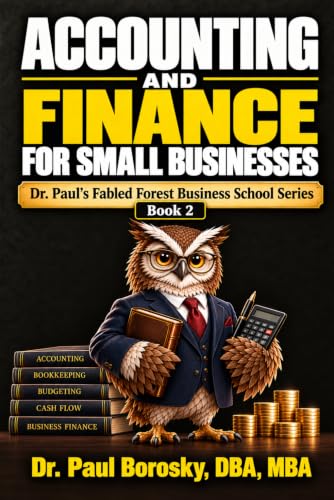
Dr. Paul’s Fabled Forest Business School Series · Book 2
Accounting and Finance for Small Businesses
Book 2 of Dr. Paul’s Fabled Forest Business School Series. Forest owners learn the money side of a small business, from Dani’s shoeboxes in Chapter 2 to the chart of accounts, the bank reconciliation, and cash flow. Each chapter names the real accounting term and ends with a one-page worksheet.
Get Book 2 on Amazon →FAQ
Spreadsheet Questions Palm Harbor Owners Ask
When should a small business stop using spreadsheets?
What should replace spreadsheets in a small business?
Does a Palm Harbor business need a county business tax receipt?
Can Dr. Paul help me move off spreadsheets?
One set of numbers. Everyone reading the same page.
Keep Going
More for Palm Harbor and Tampa Bay Owners
Dr. Paul Borosky, DBA, MBA
Business Consultant, Author & Educator | 14+ Years | 1,000+ Clients Served
Dr. Paul Borosky, DBA, MBA is a business consultant, author, and educator, and the founder of Quality Business Plan. He helps Palm Harbor and Tampa Bay owners with business planning, financial modeling, fractional CFO work, and the everyday problems of businesses that depend too much on their owners. He is the creator of Dr. Paul’s Organize-Plan-Grow™ Strategy, author of numerous published books on Amazon including Dr. Paul’s Fabled Forest Business School Series, and publisher of over 1,000 business-focused videos on YouTube. He has taught as an adjunct college instructor and teaches in Florida public schools.
This page is for general educational purposes only. It is not legal, financial, tax, accounting, technology, or other professional advice, and it does not endorse any software vendor. The cost-of-waiting example is an illustration with made-up figures; county rules and local programs are cited to their sources and change over time. For decisions about your own business, consult a qualified professional.