
Dr. Paul Borosky, DBA, MBA
College Professor · Business Consultant
How to Calculate Holding Period Return With Dividends and Excel Steps
Holding period return measures your total gain on an investment over the whole time you owned it: price change plus income, divided by what you paid. Watch Dr. Paul work it, then follow the same steps below.
Last Updated: 10/30/2026 · Written by Dr. Paul Borosky, DBA, MBA
Watch First
Watch: Holding Period Return Calculations
The Short Answer
What Is Holding Period Return?
Holding period return, or HPR, is the total return you earned while you owned an investment. Take the ending price, subtract the beginning price, add any dividends or interest you collected, and divide by the beginning price. It covers the whole holding period, whether that is six months or six years.
HPR = (P1 − P0 + D) ÷ P0
- P0
- Price you paid at the start
- P1
- Price at the end, or the price you sold for
- D
- Total dividends or interest received while you held it
- HPR
- Total return for the whole period, as a decimal
Want to Know What You Really Earned?
Step by Step
How Do You Calculate Holding Period Return With Dividends?
You buy a stock for $40.00 a share. Two years later you sell it for $46.00. Along the way it paid $1.20 a share in dividends. What did you really earn?
- 1
Write down what you know
P0 = $40.00. P1 = $46.00. D = $1.20. Holding period = 2 years.
- 2
Find the price change
$46.00 − $40.00 = $6.00 a share. On its own, that is a 15.00% gain.
- 3
Add the dividends
$6.00 + $1.20 = $7.20. This is your total dollar return per share.
- 4
Divide by what you paid
$7.20 ÷ $40.00 = 0.18, or 18.00%. That is your holding period return: 15.00% from price plus 3.00% from dividends.
- 5
Annualize it to compare
18.00% took two years. To compare it with a one year number, use (1 + HPR)1/n − 1: (1.18)1/2 − 1 = 8.63% a year. Not 9.00%. Simply dividing by two ignores compounding.
Holding period return is honest about dividends and dishonest about time. 18% sounds great until you learn it took two years. Always ask how long the money was tied up, then annualize before you compare it with anything else.
In Excel
How Do You Calculate Holding Period Return in Excel?
Put the purchase price in B2, the ending price in C2, dividends in D2, and years held in F2. Two short formulas do the rest.
| Problem | Excel formula | Answer |
|---|---|---|
| Bought $40, sold $46, $1.20 dividends | =(C2-B2+D2)/B2 | 18.00% |
| Same trade, annualized over 2 years | =(1+E2)^(1/F2)-1 | 8.63% |
| Bought $50, sold $58, $3.00 dividends, 3 years | =(58-50+3)/50 | 22.00% |
| Same trade, annualized | =(1+22%)^(1/3)-1 | 6.85% |
| Bought $40, sold $35, $1.20 dividends | =(35-40+1.2)/40 | −9.50% |
Column E holds the HPR from the first formula, so the annualized formula reads from it. Look at the last row: dividends softened a $5.00 price drop, but the trade still lost money.
Avoid These
What Are the Most Common Holding Period Return Mistakes?
- Leaving out dividends. Price alone said 15%. With dividends it was 18%. Income is part of the return.
- Dividing by the ending price. Always divide by what you paid, P0. That is the money you put at risk.
- Annualizing by simple division. 18% over two years is 8.63% a year, not 9%. Use the exponent.
- Annualizing very short holds without a warning. A big gain over a few months can turn into a huge annual number that you would never repeat. Show it, but label it.
- Comparing returns from different time periods. A two year HPR and a one year HPR are not apples to apples until both are annualized.
Real World Use
How a Student Uses Holding Period Return
Reporting a six month trade to the club
Your campus investment club bought a stock at $55.00 a share. Six months later it sold at $61.50, after collecting a $0.90 dividend. The club wants your return number for the semester report.
Price change: $61.50 − $55.00 = $6.50. Add the dividend: $6.50 + $0.90 = $7.40. Divide by the cost: $7.40 ÷ $55.00 = 13.45%. About 11.8% came from price and 1.6% from the dividend.
Annualized, (1.134545)2 − 1 = 28.72%. Report both, and say plainly that the annual figure assumes the same six months repeats, which almost never happens. That one sentence shows the club you understand the math, not just the calculator.
Keep Going
More Videos in This Series
Expected Rate of Return
Dr. Paul shows how to estimate what a stock should earn before you buy it. (3:03)
Using Excel to Calculate Gain or Loss and Weight of Stocks in a Portfolio
Dr. Paul tracks gains and losses across several stocks at once. (13:41)
Dividend Yield Problem Solved in Excel and by Hand
Dr. Paul isolates the dividend part of a stock's return. (8:24)
Questions
Holding Period Return Questions Students Ask
What is the holding period return formula?
Do you include dividends in holding period return?
How do you annualize a holding period return?
=(1+E2)^(1/F2)-1.How do I calculate holding period return in Excel?
=(C2-B2+D2)/B2. Format the cell as a percentage. For $40, $46, and $1.20, Excel returns 18.00%.Can holding period return be negative?
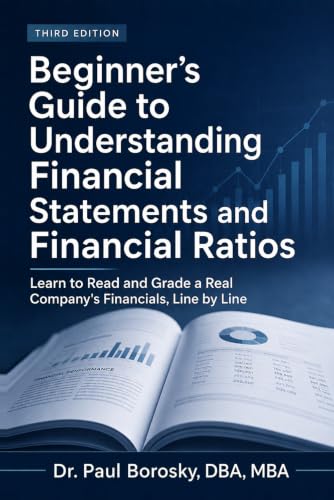
Return numbers mean more when you can read the company behind them.
Dr. Paul's Beginner's Guide to Understanding Financial Statements and Financial Ratios walks through Apple's actual 10-K in plain English, including where dividends show up and how they are paid for.
Written by Dr. Paul Borosky, DBA, MBA, current college professor, business consultant, and author with 14+ years and 1,000+ businesses served.
This page is for general educational purposes only. It is not financial, investment, legal, or tax advice.