
Dr. Paul Borosky, DBA, MBA
Business Consultant · Management Glossary
What Is Intrinsic vs. Extrinsic Motivation at Work?
Pay gets people in the door. It does not always keep them there. Business consultant Dr. Paul Borosky, DBA, MBA, explains the difference between intrinsic and extrinsic motivation, why owners who rely on raises alone often keep losing good staff, and how to pair fair pay with the growth, trust, and purpose that keep people staying.
Questions? Call or text (321) 948-9588. Dr. Paul answers personally.
Last Updated: 11/07/2026 · Written by Dr. Paul Borosky, DBA, MBA
The Short Answer
What Are Intrinsic and Extrinsic Motivation?
Paying More and Still Losing People?
In Plain English
Reasons From Outside, Reasons From Inside
Some reasons to work hard come from outside, like money. Others come from inside, like pride in doing the job well.
You need both. Pay gets people in the door. What happens after that decides whether they stay.
Watch: Motivation
Watch Dr. Paul on What Motivates People
What Motivates You?
Dr. Paul asks truck drivers what really keeps them going. The answers show both kinds of motivation at work. (4:17)
A Real-World Example
The HVAC Company That Raised Pay and Still Lost Techs
An HVAC company in Daytona Beach, Florida raises pay and still loses two technicians a year. The owner cannot figure out why.
Exit talks show the techs wanted a path to lead tech and a say in which jobs they ran. The owner adds a written skill ladder with a pay step at each level and lets senior techs pick some of their own calls. The next two techs who were thinking about leaving stay.
From Dr. Paul’s Fabled Forest
Beatrix the Bee and the Labeled Jars
Doctor Owl was at the optician having his spectacles tightened when Beatrix the Bee buzzed in, wings going a mile a minute.
“I gave every bee more coins,” she said. “More coins! And two still flew off to Talon & Beak. Well… that’s the bee’s buzz.”
Doctor Owl tested his new lenses on her. “What are your bees proud of?”
Beatrix opened her mouth and closed it again. Nobody had ever asked.
That spring every jar of Beatrix Forest Honey carried a little label with the name of the bee who made the batch. Mrs. Owl-Willow bought three jars and smiled. “Coins pay the bills,” she said. “Pride keeps the bee.”
Want more lessons like this? This story comes from Book 1 of Dr. Paul’s Fabled Forest Business School Series.
Dr. Paul’s Insight
Dr. Paul’s view: fair pay is the floor, not the ceiling. Below fair, little else works. Above it, how people are treated often decides who stays.
Put It to Work
Intrinsic vs. Extrinsic Motivation: Side by Side
| Extrinsic | Intrinsic | |
|---|---|---|
| Comes from | Outside (the business) | Inside (the person) |
| Examples | Pay, bonuses, schedule perks | Pride, mastery, purpose, a say in the work |
| Works best for | Getting people in the door, routine tasks | Keeping people, quality, improvement |
| Risk if overused | People work only for the reward | Cannot replace fair pay |
Watch Out
Pitfalls When Motivating Your Team
Money rarely fixes how people feel they are treated.
One tech wants more hours. Another wants to lead. Ask each person.
Purpose does not pay rent. Get pay to fair first.
If only the top seller gets the bonus, people may stop helping each other.
Why It Matters
Benefits of Knowing the Difference
- Can lower turnover
- Better quality work
- Lower hiring costs over time
- Team members who improve the work on their own
In Your Business Plan
How Motivation Shows Up in a Business Plan
Lenders read the payroll line closely. A retention plan next to it shows the business is not paying to rehire the same jobs every year.
Sample plan excerpt: Management, Compensation and Retention
“Technicians are paid at or above the local market rate. Each technician has a written skill ladder from apprentice to lead tech, reviewed twice a year, with a pay step at each level.”
FAQ
Questions Owners Ask About Motivation at Work
Which is better, intrinsic or extrinsic motivation?
Can money kill intrinsic motivation?
How do small businesses motivate employees without big raises?
More From the Series
Keep Building Your Business
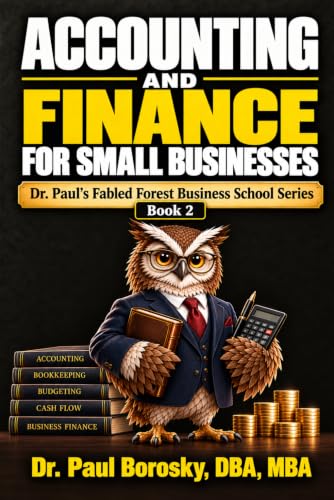
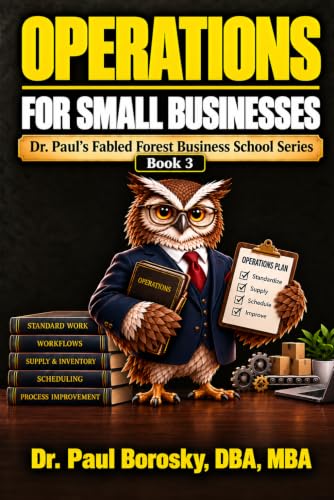
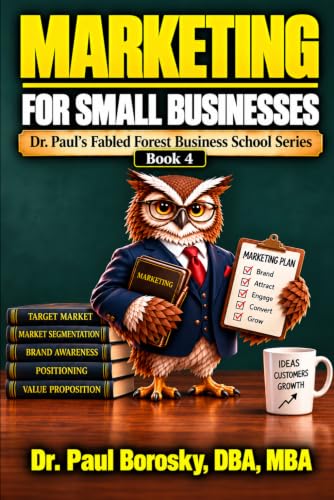
Every book in Dr. Paul’s Fabled Forest Business School Series teaches one subject through short stories, real terms, and one-page worksheets.
Dr. Paul Borosky, DBA, MBA
Dr. Paul is a business consultant and author with 14+ years of experience and 1,000+ written business plans. He works with owner-run small businesses on plans, financial projections, and the systems that let a business run without the owner doing everything. This page is part of the glossary for Management and Leadership for Small Businesses, Book 1 of Dr. Paul’s Fabled Forest Business School Series.
This page is for general educational purposes only. It is not legal, HR, or other professional advice. Pay and employment rules vary by state; consult a qualified professional.