
Dr. Paul Borosky, DBA, MBA
Business Consultant · Management Glossary
What Is Closed-Loop Communication at Work?
Closed-loop communication is a simple habit: the person who receives an instruction says it back, and the sender confirms it. Pilots and surgical teams rely on it. Here, business consultant Dr. Paul Borosky, DBA, MBA, shows how a small business can use the same loop at the front desk, on job sites, and in daily huddles to stop costly repeat mistakes.
Questions? Call or text (321) 948-9588. Dr. Paul answers personally.
Last Updated: 11/07/2026 · Written by Dr. Paul Borosky, DBA, MBA
The Short Answer
What Is Closed-Loop Communication?
Saying It Twice and Still Getting It Wrong?
In Plain English
Say It, Hear It Back, Confirm
You say it. They say it back in their own words. You fix any gap. Done.
It takes about ten seconds, and it catches the mistake before it happens instead of after.
A Real-World Example
The Dental Office That Kept Booking the Wrong Visit
The front desk at a dental office in Lake Mary, Florida books the wrong appointment type three times in one week. Each time, a patient shows up for a cleaning when they needed a longer visit.
The office manager starts one habit: for any schedule change, the staff member repeats back what, who, and by when before entering it. Mix-ups drop off, and nobody has to stay late fixing the schedule.
From Dr. Paul’s Fabled Forest
Fast Frankie and the Three Wrong Pizzas
Doctor Owl was third in line at Fast Frankie’s food truck when Frankie shouted three orders across the counter, all at once, and three wrong pizzas came out of the oven.
“Two minutes!” Frankie said, already spinning dough. “I’ve always got two minutes… tomorrow.”
Doctor Owl took a napkin and wrote three words on it. What. Who. By when. He slid it across the counter.
On the next order, Frankie read the napkin out loud. The cook said it back: one mushroom, for the badger in the red scarf, right now. Frankie nodded.
The pizza came out right. Frankie taped the napkin above the oven, where it stayed all season.
From Book 1 of Dr. Paul’s Fabled Forest Business School Series, where every business lesson starts with a story.
Dr. Paul’s Insight
Dr. Paul’s take: many “lazy employee” problems turn out to be communication problems. If nobody repeated it back, nobody may have heard it the same way.
Put It to Work
Closed-Loop Communication in Three Lines
Watch Out
Pitfalls When Using Closed-Loop Communication
Almost everyone says yes to “got it?” Ask them to say it back instead.
If it feels like a quiz, people get defensive. Treat it as a tool for both of you.
Rush hour is when mistakes happen most, which is when the loop matters most.
Managers should repeat back what employees tell them, too.
Why It Matters
Benefits of Closed-Loop Communication
- Fewer mistakes and redos
- Less time repeating yourself
- Team members tend to speak up sooner
- Clearer ownership of each task
In Your Business Plan
How Closed-Loop Communication Shows Up in a Business Plan
Lenders rarely ask about communication by name, but they do read the operations section for signs that the business runs on systems, not memory.
Sample plan excerpt: Operations, Staff Procedures
“All schedule changes and shift handoffs follow a say-it-back standard: the receiving staff member repeats the change, and the sender confirms before it is entered.”
FAQ
Questions Owners Ask About Closed-Loop Communication
Where does closed-loop communication come from?
How do you use closed-loop communication in a small business?
What is confirmation in communication?
More From the Series
Keep Building Your Business
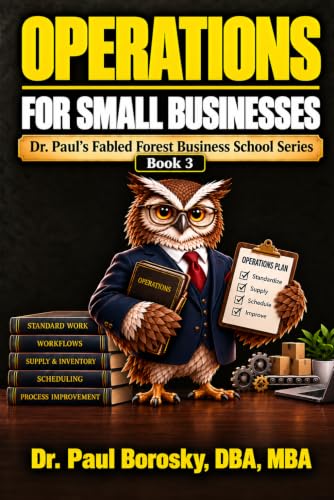
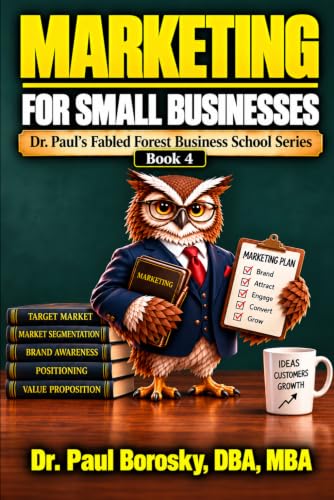
Every book in Dr. Paul’s Fabled Forest Business School Series teaches one subject through short stories, real terms, and one-page worksheets.

Dr. Paul Borosky, DBA, MBA
Dr. Paul is a business consultant and author with 14+ years of experience and 1,000+ written business plans. He works with owner-run small businesses on plans, financial projections, and the systems that let a business run without the owner doing everything. This page is part of the glossary for Management and Leadership for Small Businesses, Book 1 of Dr. Paul’s Fabled Forest Business School Series.
This page is for general educational purposes only. It is not legal, HR, or other professional advice. For decisions about your own business, consult a qualified professional.